
Brick Pointing: Protect Your Masonry Investment
October 25, 2026
How to Prevent Patio Puddling Before It Spreads
October 29, 2026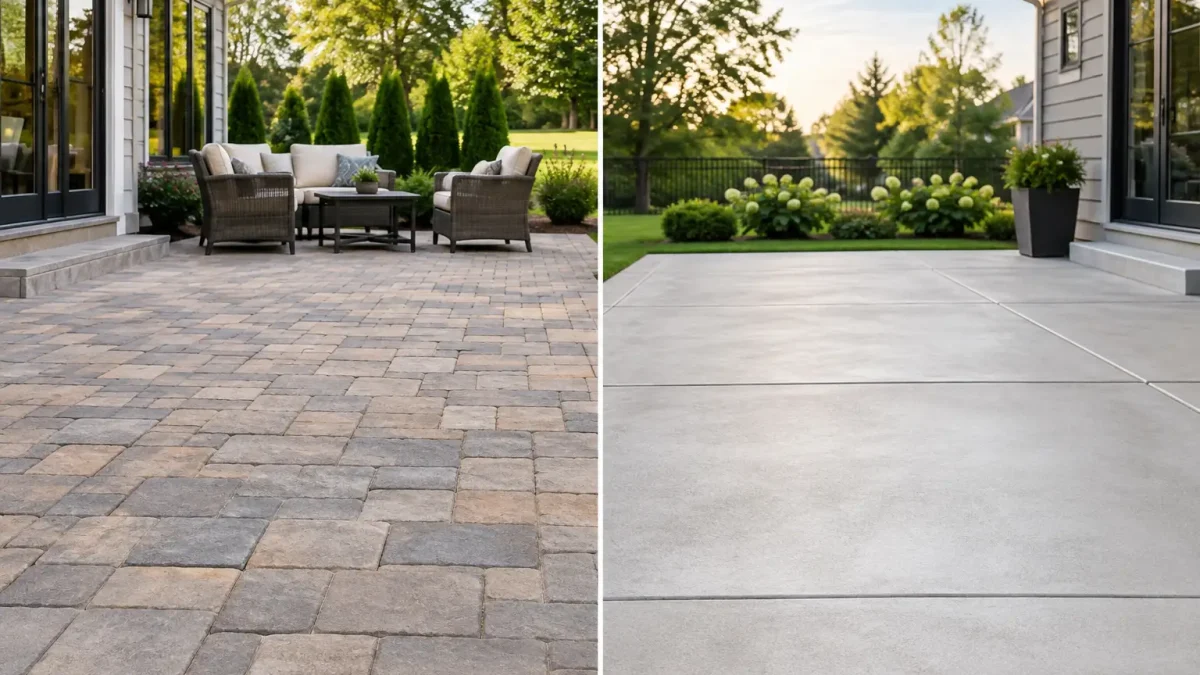
A patio has to do more than look good on installation day. It needs to handle patio furniture, cookouts, foot traffic, rain, freeze-thaw weather, and the way your family actually uses the yard. When homeowners compare pavers vs concrete patios, the better choice is rarely a simple matter of price. It comes down to the look you want, the condition of the site, how much maintenance you are comfortable with, and how long you expect the space to serve your home.
For many properties along Philadelphia’s Main Line and surrounding Pennsylvania communities, both options can create a beautiful outdoor living area when they are designed and installed correctly. The difference is in how each material performs over time.
Pavers vs Concrete Patios: The Core Difference
A concrete patio is a continuous slab poured, finished, and cured in place. It can have a smooth broom finish, a decorative stamped pattern, exposed aggregate, color, or a custom edge detail. Its clean, solid surface works especially well with traditional, modern, and low-maintenance backyard designs.
Pavers are individual manufactured concrete units installed over a prepared aggregate base and bedding layer. Joint sand helps lock the pavers together while allowing the surface to flex slightly. They are available in many shapes, colors, and laying patterns, making them a strong choice for homeowners who want a more segmented, architectural appearance.
Neither material is automatically superior. A well-built concrete patio will outperform poorly installed pavers, and a properly prepared paver patio will outperform a thin or improperly supported concrete slab. Site preparation, base work, drainage, and skilled finishing matter as much as the surface material.
Upfront Cost and Long-Term Value
Concrete often has a lower starting cost for a straightforward patio because it is poured as one surface. A basic broom-finished concrete patio is generally the most budget-friendly way to create a durable, usable outdoor area. Decorative finishes, custom colors, borders, curved forms, and stamped concrete increase the investment, but they can still offer significant visual impact without the cost of natural stone.
Paver patios usually cost more upfront. Each unit must be placed, aligned, cut at edges, and compacted over a carefully constructed base. Patterns, intricate borders, site access, curves, and changes in elevation can add labor and material costs.
The long-term value question depends on what matters most to you. Concrete provides a clean, substantial surface with relatively simple routine care. Pavers can offer greater design flexibility and easier spot repair, which may be worthwhile for homeowners planning a detailed outdoor living space or anticipating future changes to the yard.
It is wise to compare estimates by scope, not just the final number. A quality proposal should account for excavation, base preparation, grading, drainage, reinforcement or edge restraint where appropriate, material selection, finish details, and cleanup. A low price that skips the work beneath the patio can become an expensive problem later.
Appearance and Design Flexibility
If you picture a broad, clean surface that lets landscaping, furniture, or a fire feature take center stage, concrete may be the right fit. It can be finished with subtle texture for traction, colored to complement the home, or stamped for a more decorative effect. Large-format concrete areas also create a calm, open visual that works well in contemporary backyards.
Pavers bring more pattern and texture to the design. Running bond, herringbone, basket weave, and modular layouts can create a tailored look that complements brick homes, stone facades, walkways, and garden walls. Paver borders can define the patio edge or tie the surface into existing hardscape features.
There is a practical side to appearance, too. Highly textured finishes may collect dirt more readily than a simple broom finish. Very light colors can show stains, while very dark surfaces can become hot in direct summer sun. Samples should be viewed outdoors at different times of day, not just under showroom lighting.
Pennsylvania Weather, Drainage, and Movement
Pennsylvania weather asks a lot of exterior surfaces. Rain, snow, ice, hot summers, and winter freeze-thaw cycles all affect a patio. Water management is one of the most important parts of the project, regardless of whether you choose pavers or concrete.
A concrete patio needs appropriate slope to move water away from the house and avoid standing water. It also needs properly placed control joints. These planned joints encourage concrete to crack in more controlled locations as the slab cures and moves. Concrete can crack over time, even when installed correctly. The goal is not to promise a crack-free slab, but to build a properly supported patio that manages movement and remains functional and attractive.
Pavers handle minor ground movement differently because the system is made of individual units. If a small area settles, it can often be lifted, the base corrected, and the pavers reinstalled. However, that benefit depends on a stable, well-compacted base and solid edge restraints. Without them, pavers can shift, separate, or develop low spots that hold water.
Poor drainage can undermine either choice. Downspouts, existing grading, soil conditions, and nearby retaining features should all be considered before work begins. A patio should improve how the yard functions, not create water issues near the foundation.
Maintenance and Everyday Care
Concrete is generally simple to maintain. Regular sweeping and occasional washing remove dirt, leaves, and surface debris. Depending on the finish and exposure, a quality sealer may help protect the surface and maintain its appearance. Avoid harsh de-icing products that can damage concrete, particularly during its early life.
Pavers also need routine sweeping and washing, but the joints require more attention. Joint sand can erode over time, and weeds may eventually find their way into neglected joints. Periodic replenishment of joint sand and occasional cleaning keep the patio looking sharp and help maintain interlock.
Both materials can stain from grill grease, planters, rusting furniture, and spilled drinks. Cleaning spills promptly is the simplest way to protect the surface. If you expect frequent grilling or outdoor dining, talk with your contractor about finish and color choices that are more forgiving in high-use areas.
Repairs: Where Pavers Have an Advantage
When a concrete slab develops a significant crack, repair options depend on the cause, location, and desired appearance. Some cracks can be filled or treated, but a repaired area may remain visible. In more serious cases involving settlement or drainage problems, replacement of part or all of the slab may be the most reliable solution.
Pavers are often easier to repair at the individual-unit level. A stained, damaged, or shifted section can be taken up and reset without replacing the entire patio surface. Keeping a small supply of extra pavers from the original project is a smart move, especially because product colors and styles can change over time.
That said, easy repair should not be confused with no maintenance. Pavers still require a sound base, proper compaction, and routine attention to joints. The ability to reset a section is valuable, but quality installation remains the foundation of performance.
Which Patio Is Right for Your Property?
Choose concrete when you want a clean, continuous surface, straightforward maintenance, and strong value for a larger patio footprint. It is an excellent choice for homeowners who prefer a modern or classic look and want options ranging from practical broom-finished concrete to more decorative stamped designs.
Choose pavers when pattern, texture, and design detail are central to your vision. They can be especially appealing when you want to coordinate a patio with existing brick, stone, walkways, or landscape features. They also make sense when the ability to access and repair smaller areas is a priority.
The best decision starts with the yard itself. Consider the slope, soil, drainage paths, access for materials, intended furniture layout, and whether the patio may connect to steps, a walkway, an outdoor kitchen, or a future addition. A square patio that looks affordable on paper can need a different approach if the site has drainage challenges or significant grade changes.
At Provato Concrete and Masonry and Grindin LLC, we help property owners look beyond surface appearance and plan patios that are built for real use and lasting performance. A professional site evaluation can clarify the right material, finish, grading approach, and project scope before construction begins.
Your backyard should feel like an extension of your home, not another project waiting on the to-do list. Schedule an estimate online to discuss your patio goals and build a space you will be proud to use season after season.