
Pavers vs Concrete Patios – Which Is Better?
October 27, 2026
A Commercial Masonry Project Example That Lasts
October 31, 2026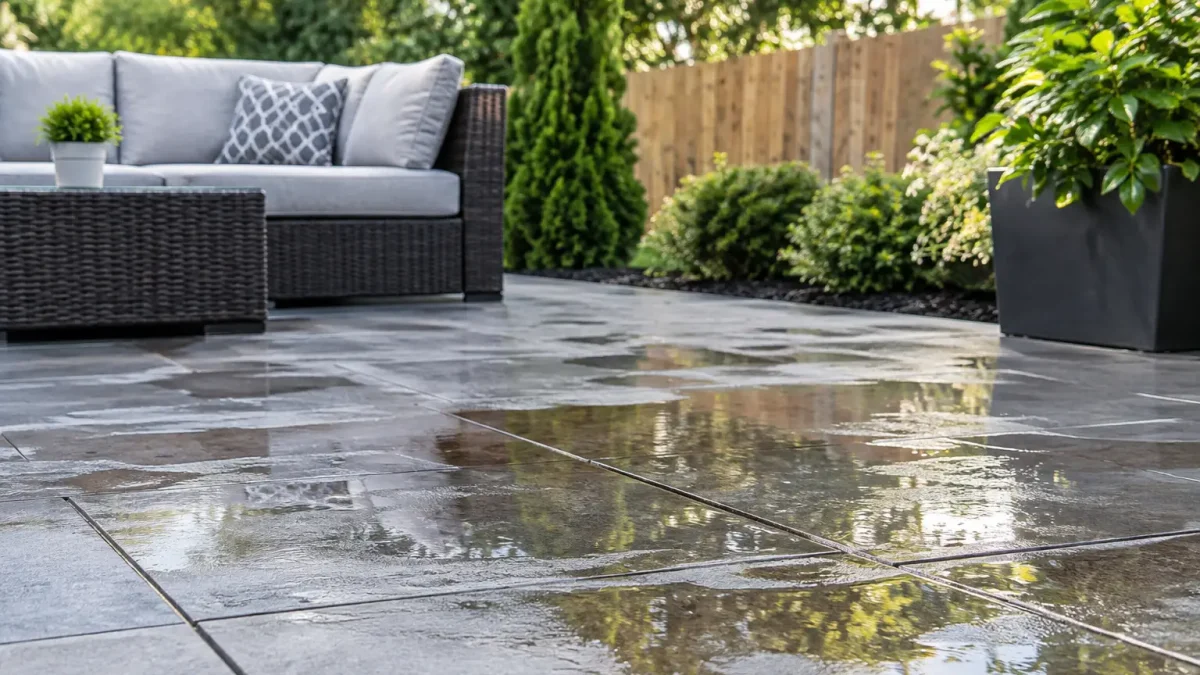
A patio should be ready when the weather is right, not blocked off by standing water after every rainstorm. Knowing how to prevent patio puddling starts with looking beyond the water itself. A puddle is usually a sign that the patio’s slope, base, drainage path, or surface condition is not doing its job.
In Southeastern Pennsylvania, freeze-thaw cycles, heavy downpours, settling soil, and mature landscaping can all change how water moves around a property. Addressing the cause early protects the appearance, safety, and service life of your concrete or hardscape patio.
Why Patio Puddles Are More Than an Annoyance
A small puddle may look harmless, but repeated standing water can lead to bigger issues. Water that remains on the surface can leave stains, encourage algae growth, create a slippery walking area, and work its way into small cracks. When temperatures drop, trapped water freezes and expands, which can widen those cracks and contribute to surface damage over time.
Puddling can also indicate that water is moving toward the house instead of away from it. That is the issue homeowners should take seriously. A patio is part of the property’s overall drainage plan. It should direct water away from the foundation, door thresholds, and other structures while still fitting naturally into the landscape.
The right solution depends on whether the patio is newly installed, showing early signs of settling, or dealing with a long-standing drainage problem. There is no one repair that fits every property.
How to Prevent Patio Puddling at the Source
The most reliable way to prevent patio puddling is to build or correct the patio so water has a clear path to drain. A surface cannot shed water properly if it is flat, low in the center, or pitched in the wrong direction.
Start With the Right Slope
Concrete patios need a consistent slope away from the home. A common guideline is about one-quarter inch of fall per foot of patio length, although the exact pitch can depend on the patio layout, elevations, door clearances, and available drainage areas. The goal is enough slope to move water efficiently without making the surface feel noticeably tilted underfoot.
This slope should be planned before concrete is placed, not guessed at during finishing. Contractors use layout measurements, string lines, levels, and grade checks to establish where water will go. On a large patio, the surface may need more than one drainage direction, especially where a house, retaining feature, or adjoining walkway limits the available outlet.
Avoid solving a drainage problem by simply creating a steep drop at one edge. Water needs somewhere safe to go after it leaves the patio. If it is sent into a planting bed that already stays saturated or toward a neighboring property, the problem has only been moved.
Build on a Stable, Well-Prepared Base
A patio can have the correct slope on installation day and still develop low spots later if the ground beneath it settles. Poor compaction, soft soil, decaying roots, and inadequate base material can all create uneven support below the slab or pavers.
For a new concrete patio, proper excavation and subgrade preparation matter as much as the visible finish. The base should be graded, compacted, and built to support the planned load and local soil conditions. Water-sensitive areas may also require added drainage measures before the patio is installed.
This is one reason surface patching rarely solves recurring puddles. If the low area is caused by movement below the surface, filling it may temporarily improve drainage but will not correct the underlying support issue.
Keep Runoff From Overwhelming the Patio
Even a properly sloped patio can puddle if it receives too much roof or landscape runoff. Check where downspouts discharge during a hard rain. A downspout that empties directly onto a patio can create splashback, staining, erosion at the edges, and a constant concentration of water in one area.
Downspout extensions, underground drain lines, and properly positioned splash blocks can move roof water beyond the patio area. The best option depends on the property’s grade and where water can safely discharge. Water should never be directed against the foundation or onto a public walkway.
Nearby planting beds also deserve attention. Mulch, soil, and edging can gradually build up until they sit above the patio surface. When that happens, rainwater and irrigation may wash onto the concrete instead of draining into the landscape. Keeping soil and mulch below the patio edge helps maintain the intended drainage path.
Choose Drainage Features That Fit the Layout
Some patios need more than slope alone. When a patio is enclosed by walls, steps, a pool area, or a home addition, a dedicated drainage feature may be the most practical answer.
A channel drain can collect water along a doorway, at the base of a step, or where two hard surfaces meet. It directs water into a suitable outlet instead of allowing it to collect at a threshold. These drains must be set at the correct elevation and kept clear of leaves, mulch, and debris to work well.
For patios beside landscaped areas, a swale or regraded planting bed may provide a simple route for water to move away. In other cases, a catch basin and buried drainage line may be appropriate. The correct choice comes down to available elevation, soil drainage, roof runoff, and the amount of water the system needs to handle.
Drainage features should be functional without becoming an eyesore. Thoughtful placement can preserve the clean appearance of an outdoor living space while protecting it during the heaviest storms.
Repair Low Spots Before They Worsen
If water consistently collects in the same area, mark the spot after the patio has dried and watch how it behaves during the next rainfall. Note whether the water appears immediately, flows in from another surface, or remains long after the rest of the patio drains. Those details help identify whether the issue is slope, runoff, settlement, or a combination of factors.
Minor surface depressions may sometimes be corrected with a compatible resurfacing or repair material. This approach only works when the slab is otherwise stable and the repair can be feathered or finished without creating a trip hazard. Color, texture, and bond quality should be considered, especially on a decorative patio.
For larger low areas, cracking, displaced sections, or obvious settling, a more substantial repair may be necessary. Depending on the condition of the patio, that could involve targeted slab leveling, removing and replacing a section, or rebuilding the patio with corrected base preparation and drainage. A professional assessment helps avoid spending money on a cosmetic fix that will fail after the next season of weather changes.
Do Not Ignore Edges, Joints, and Cracks
Water often finds its way in through the smallest opening. Expansion joints and control joints help concrete manage normal movement, but joints that are open, deteriorated, or filled with debris can hold water and allow it to reach the base below. Keeping these areas clean and properly sealed where appropriate can reduce water intrusion.
Cracks should also be evaluated rather than covered up. A thin, stable crack may be repairable, while a crack with one side higher than the other can point to movement or settlement. That distinction matters because drainage repairs work best when the surface itself is stable.
Patio edges should meet surrounding grade thoughtfully. If soil has eroded away beneath an edge, if pavers have shifted, or if an adjacent walkway funnels water toward the patio, the drainage system needs to be addressed as a whole.
When It Is Time to Bring in a Professional
Call for an evaluation when puddles remain for more than a day after normal rainfall, water is moving toward the home, cracks are growing, or the patio has begun to settle. These are signs that the issue may extend below the surface or involve the larger grading plan around the property.
A qualified concrete and masonry contractor can evaluate the patio’s pitch, inspect surrounding drainage, identify low points, and recommend a repair plan that fits the condition of the surface. At Provato Concrete and Masonry and Grindin LLC, we approach patio drainage with the same care we bring to every exterior improvement: clear planning, quality workmanship, and a finish built to last.
A dry patio starts with water having a place to go. If yours is holding water after rain, schedule an online estimate before a small low spot turns into a larger repair.