

7 Best Masonry Upgrades for Curb Appeal
October 23, 2026
Pavers vs Concrete Patios – Which Is Better?
October 27, 2026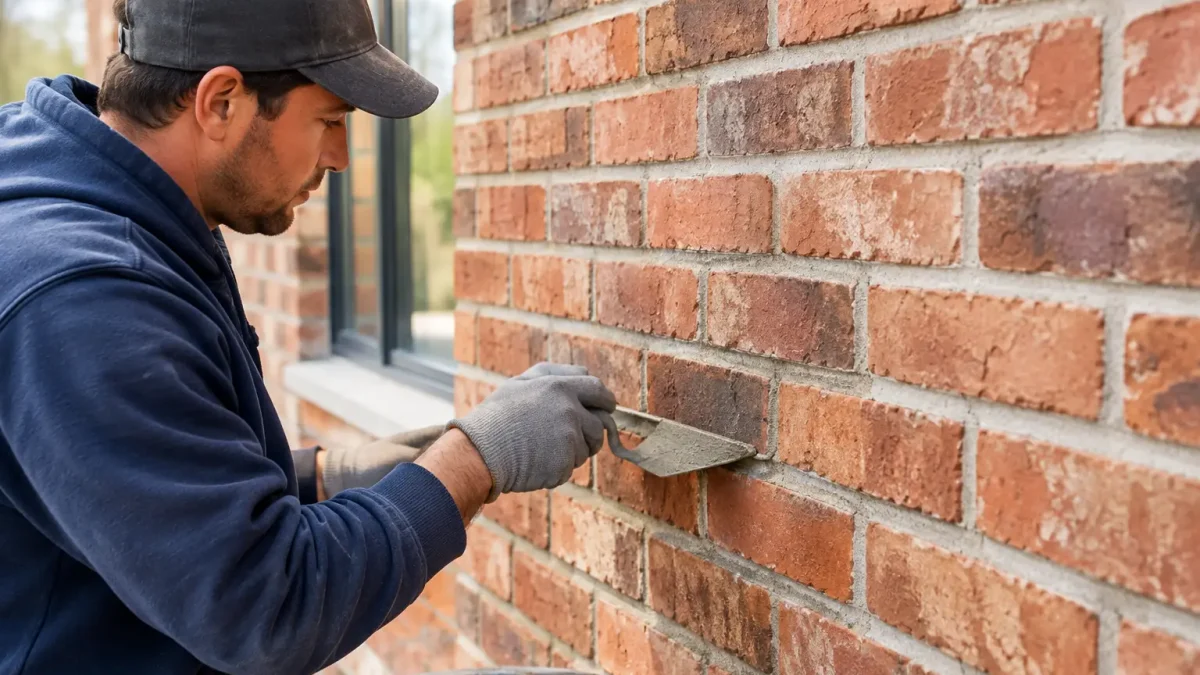
Mortar joints rarely fail all at once. They begin with a small crack, a sandy spot beneath a window, or a gap that seems minor from the driveway. Left alone through Southeastern Pennsylvania rain, freeze-thaw cycles, and changing seasons, that small issue can allow water behind the brick. Professional brick pointing addresses the problem at its source by removing deteriorated mortar and replacing it with a sound, properly matched joint.
For homeowners and property managers, this work is about more than improving appearance. Well-maintained mortar helps protect the wall system, preserve curb appeal, and prevent a manageable repair from becoming a larger masonry project. The right repair takes experience, careful preparation, and materials selected for the building in front of you.
What Brick Pointing Really Does
Brick pointing, often called repointing, is the process of renewing mortar joints between existing bricks. A masonry professional removes loose, cracked, or weathered mortar to an appropriate depth, cleans the joint, and installs fresh mortar that is shaped and finished to match the surrounding work.
The brick itself may still be in excellent condition while the mortar around it has reached the end of its service life. Mortar is intended to be the more sacrificial part of a masonry wall. It should manage movement and weather exposure without forcing stress into the brick. That is why replacing failed joints correctly matters so much.
A quality pointing repair can help keep water from entering open joints, restore a cleaner and more uniform appearance, and reinforce the wall’s ability to perform as intended. It can be completed on chimney stacks, exterior walls, garden walls, steps, foundations, parapets, and other brick features where mortar has begun to break down.
Signs Your Brickwork Needs Pointing
A quick visual check can reveal a great deal. Mortar that is receding deeply behind the face of the brick, crumbling when touched, cracked in several places, or missing entirely is a clear sign that attention is needed. White staining on brick, known as efflorescence, can also point to recurring moisture movement through the wall.
Look closely around chimneys, window sills, exterior steps, and areas near gutters or downspouts. These locations receive more water exposure and often show mortar failure first. Indoors, damp spots, peeling paint near exterior masonry, or a musty smell may suggest moisture is getting through a compromised wall, although the exact source should be evaluated before any repair begins.
Not every hairline crack calls for full repointing. Some masonry needs localized joint repairs, while a larger section may require comprehensive work for a consistent and durable result. The condition of the brick, wall movement, drainage, flashing, and previous repairs all affect the right scope.
Why Mortar Matching Is Not a Detail
One of the biggest mistakes in masonry repair is treating all mortar as the same. It is not. The mortar needs to be compatible with the age, condition, and strength of the existing brickwork. A mix that is too hard can create problems, particularly on older, softer brick, because moisture and movement may place stress where it does not belong.
Color and joint profile matter, too. A repair should blend naturally with the surrounding masonry rather than look like a patchwork of unrelated materials. Matching may involve evaluating the existing mortar’s color, texture, sand, joint width, and finish. Common profiles include concave, flush, weathered, and struck joints, and each creates a different appearance and sheds water differently.
This is where skilled craftsmanship separates a lasting repair from a cosmetic cover-up. Simply smearing new mortar over old, failing joints may look better briefly, but it does not remove weak material or create the bond needed for long-term performance.
The Process Behind a Durable Repair
Proper work starts with an honest inspection and a clearly defined repair area. Failed mortar is carefully removed without chipping brick edges or damaging sound joints. The joints are then cleaned of dust and debris so the new mortar can bond correctly.
Before fresh mortar is installed, the masonry may need controlled dampening. Brick can pull moisture from new mortar too quickly, especially in warm or dry conditions, which can weaken curing. The mortar is packed into the joint in layers as needed, then tooled to the selected profile at the right time.
Curing is not an afterthought. Fresh mortar needs suitable protection from heavy rain, direct heat, freezing temperatures, and rapid drying while it develops strength. Weather can affect scheduling, and a professional contractor should plan the work around conditions that support a quality result instead of rushing to finish on an unsuitable day.
Brick Pointing and Water Management Go Together
New mortar alone cannot solve a water issue caused by overflowing gutters, missing flashing, poor grading, or a leaking roof connection. If water repeatedly pours onto the same wall, even a well-executed pointing repair will be asked to do more than it should.
That is why a good masonry assessment considers the whole area. Chimney repairs may call for attention to the cap, flashing, or crown. A low brick wall may need improved drainage nearby. A wall with persistent staining might benefit from correcting a downspout discharge before the mortar work begins.
The goal is not to sell unnecessary work. It is to identify the conditions affecting the masonry so your investment has the best chance to last. Addressing water management early can reduce repeated repairs and protect the appearance of surrounding brick and stone.
When to Repair Rather Than Wait
Brick pointing is often most cost-effective when deterioration is limited to mortar joints. Waiting until bricks become loose, moisture reaches interior finishes, or sections of a chimney begin to shift usually expands the work and the budget.
Spring and fall are popular seasons for masonry repairs because weather is often favorable, but inspection should happen whenever you notice changes. A small repair completed at the right time can help preserve original brickwork that gives an older Main Line or suburban Pennsylvania property much of its character.
For commercial properties, routine inspection is equally practical. Entry walls, façade sections, loading areas, and exterior steps influence both safety and the impression a property makes on tenants, visitors, and customers. Planned maintenance helps managers address issues on a workable schedule instead of reacting to a sudden failure.
Choosing the Right Masonry Contractor
Ask how the contractor will evaluate the brick and existing mortar, not just the visible gaps. You should also understand how they will protect nearby landscaping and surfaces, manage dust and debris, match the mortar, and handle weather-related scheduling.
A clear estimate should explain the repair area and the expected work rather than rely on vague language. Quality masonry takes careful labor, so the lowest price is not always the best value if it skips joint preparation, compatible materials, or proper curing. You want a team that communicates clearly, respects your property, and takes pride in the finished details.
At Provato Concrete and Masonry and Grindin LLC, we approach masonry repairs with that standard of care. Our team helps homeowners, property managers, and commercial clients make informed decisions about the condition of their brickwork and the repairs that will serve the property best.
If your mortar joints are cracking, washing out, or leaving gaps around otherwise sound brick, schedule an online estimate before another season of weather gets into the wall. A timely, professionally completed repair can keep your masonry looking strong and doing its job for years ahead.