
Concrete Scaling Causes and How to Stop Them
October 13, 2026
How to Budget Hardscape Upgrades Without Surprises
October 17, 2026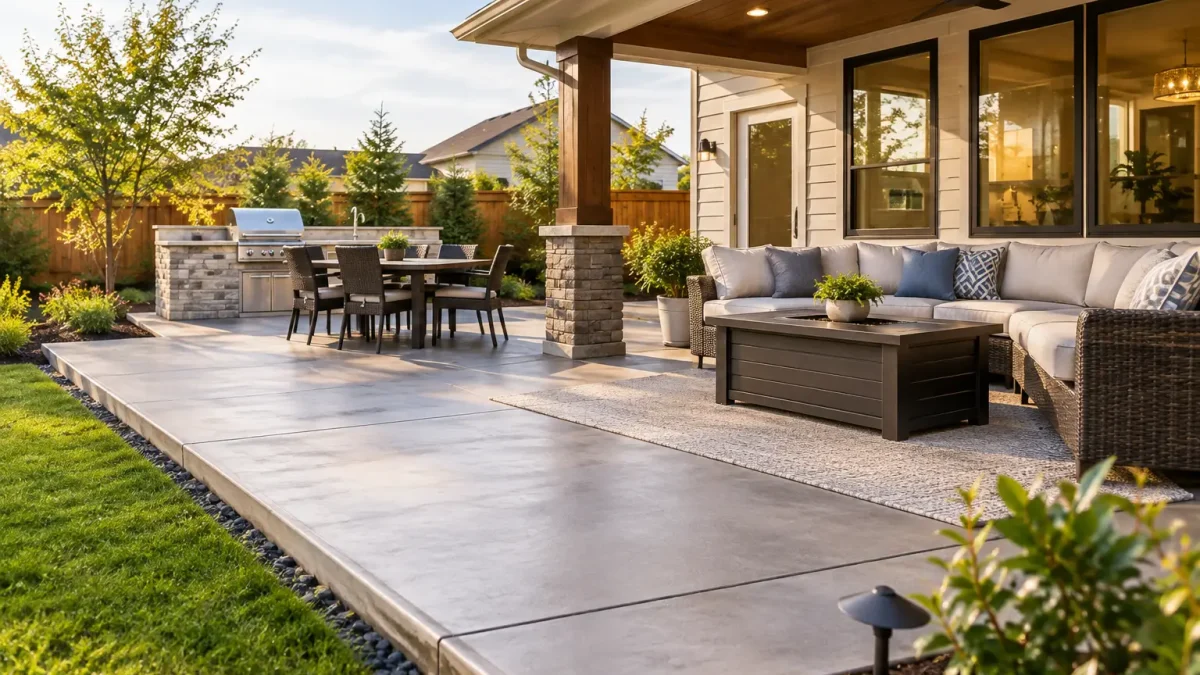
A patio should make the backyard easier to enjoy, not create another maintenance problem. Well-planned concrete patios give homeowners a clean, durable surface for grilling, dining, relaxing, and entertaining – with the strength to handle everyday use and Pennsylvania’s changing weather.
The difference is rarely just the concrete itself. It is the preparation beneath it, the drainage around it, the finish on top, and the care taken at every edge and joint. When those details are handled correctly, a patio becomes a dependable part of the property for years to come.
Start With How You Want to Use the Space
The best patio size and layout depend on what needs to happen there. A small bistro table requires very different space than an outdoor dining set, a grill station, lounge furniture, or a fire feature. Planning around the furniture first helps prevent a patio that looks good on paper but feels cramped once it is in use.
A practical layout should also account for traffic. People need room to move between the house, seating area, grill, yard, and gates without cutting through the middle of a conversation or stepping over furniture. For many homeowners, a simple rectangular patio works beautifully. Others benefit from a wider landing at a door, a curved edge that follows landscaping, or separate zones for dining and lounging.
Placement matters just as much as size. Afternoon sun, privacy from neighboring homes, views from inside the house, and access to the kitchen all shape the right location. A patio can be an extension of the home, but it should still fit naturally into the property rather than overpower the yard.
What Makes Concrete Patios Last
Concrete is strong, but a lasting installation begins below the visible surface. The existing ground must be evaluated, excavated to the proper depth, and prepared with a stable base. Soft spots, poor compaction, and uneven support can lead to settling and cracking long after the crew has left.
Drainage is another non-negotiable detail. The patio needs a purposeful slope that moves water away from the home and prevents standing puddles. This slope is subtle enough to feel level underfoot, yet effective enough to protect the surface and help keep water from collecting near the foundation.
Control joints are also part of quality workmanship. Concrete naturally moves as temperatures change and as the material cures. Properly placed joints help guide where cracking is most likely to occur, creating a cleaner, more controlled appearance. They do not eliminate every possibility of cracking, but they are an essential part of a professional installation.
For homes in the Main Line and surrounding southeastern Pennsylvania communities, freeze-thaw conditions deserve real attention. Moisture that enters weak areas can expand during cold weather, putting pressure on the slab. A properly prepared base, sound drainage, appropriate thickness, and quality finishing all work together to give the patio a better chance of standing up to the seasons.
Choose a Finish That Fits the Property
A concrete patio does not have to look plain. The finish should match the architecture of the home, the style of the landscape, and the level of upkeep the owner wants. The right choice balances appearance, traction, durability, and budget.
A broom finish is a popular option for a reason. It creates a lightly textured surface with dependable traction, especially around outdoor kitchens, steps, and areas exposed to rain. It has a clean, classic appearance that works well with traditional homes and modern properties alike.
Stamped concrete can bring more decorative character by creating patterns inspired by stone, slate, brick, or wood. It is a strong choice when a homeowner wants a more detailed outdoor living area without using individual pavers. It does require careful installation and ongoing attention to sealing, particularly in areas exposed to weather and frequent foot traffic.
Exposed aggregate offers a textured finish with decorative stone visible at the surface. It can add visual interest and grip, though it is not the right fit for every home or every bare-footed patio area. Smooth finishes can create a more contemporary look, but they should be considered carefully where slip resistance is a concern.
Color can be added as well, from subtle earth tones that blend with stonework to warmer shades that complement brick. A professional conversation about color should include realistic expectations. Concrete has natural variation, and that variation is part of its character. Samples and a clear discussion before work begins help align the finished look with the homeowner’s expectations.
Decorative Concrete Has Trade-Offs
More decorative finishes generally require more planning and more maintenance than a standard broom-finished slab. Stamped surfaces, for example, can be beautiful but may need resealing to preserve color and protection. Simple finishes often offer the best balance of cost, traction, and easy care.
The right patio is not always the most elaborate one. It is the one that suits the home, the way the space will be used, and the owner’s long-term expectations.
Details That Make a Patio Feel Finished
The edges, transitions, and surrounding features are where a patio begins to feel custom. Clean lines along a lawn or garden bed give the space definition. A properly built step makes the transition from a door safer and more comfortable. Coordinating walkways can create a natural flow from the driveway, side yard, or pool area.
Homeowners may also want to plan for future additions. A patio can be poured with an outdoor kitchen, pergola, seating wall, or fire feature in mind, even if those elements are installed later. Thinking ahead can prevent awkward modifications and protect the finished surface from unnecessary disruption.
If the patio meets an existing structure, the connection needs thoughtful attention. Water should not be trapped against siding, trim, or masonry. Door clearances, grade changes, and nearby drainage features should all be reviewed before the project begins. These are the details that separate a surface that merely fills a space from an outdoor area built to perform.
Care That Protects Your Investment
Concrete patios are relatively low-maintenance, but low-maintenance does not mean no maintenance. Regular sweeping keeps dirt, leaves, and grit from building up. Occasional washing helps preserve the appearance, especially after pollen season or heavy weather.
Avoid using harsh deicing chemicals during winter. Some products can damage concrete surfaces, particularly newer concrete or decorative finishes. Use products appropriate for concrete and follow the recommendations for your specific patio finish.
Sealing may be worthwhile depending on the finish, exposure, and traffic level. Decorative concrete often benefits from periodic resealing, while a standard patio may need less frequent attention. A contractor can help determine whether sealing makes sense for the surface and how often it should be done.
Small issues deserve early attention. Minor cracking can occur in concrete, but changes in crack width, uneven sections, pooling water, or surface scaling should be evaluated before they become larger repairs. Staying ahead of those concerns protects the patio and the area around it.
Work With a Contractor Who Plans the Whole Project
A patio project should begin with a site visit and a clear conversation, not a quick guess from a photo. The contractor should ask how you plan to use the space, assess grades and drainage, discuss finish options, and explain the work involved. Clear expectations on layout, preparation, timing, and cost create a better experience from the start.
At Provato Concrete and Masonry and Grindin LLC, we approach outdoor concrete work with the same focus we bring to every project: skilled craftsmanship, dependable communication, and pride in the finished result. A well-built patio should look right, drain right, and feel like it has always belonged at your home.
Got dreams? Let’s build a patio that gives your outdoor space a stronger foundation for everyday life. Schedule your online estimate and start the conversation with a team ready to do the job right.