

How to Prevent Patio Puddling Before It Spreads
October 29, 2026
A Sloped Yard Patio Project Example Built Right
November 2, 2026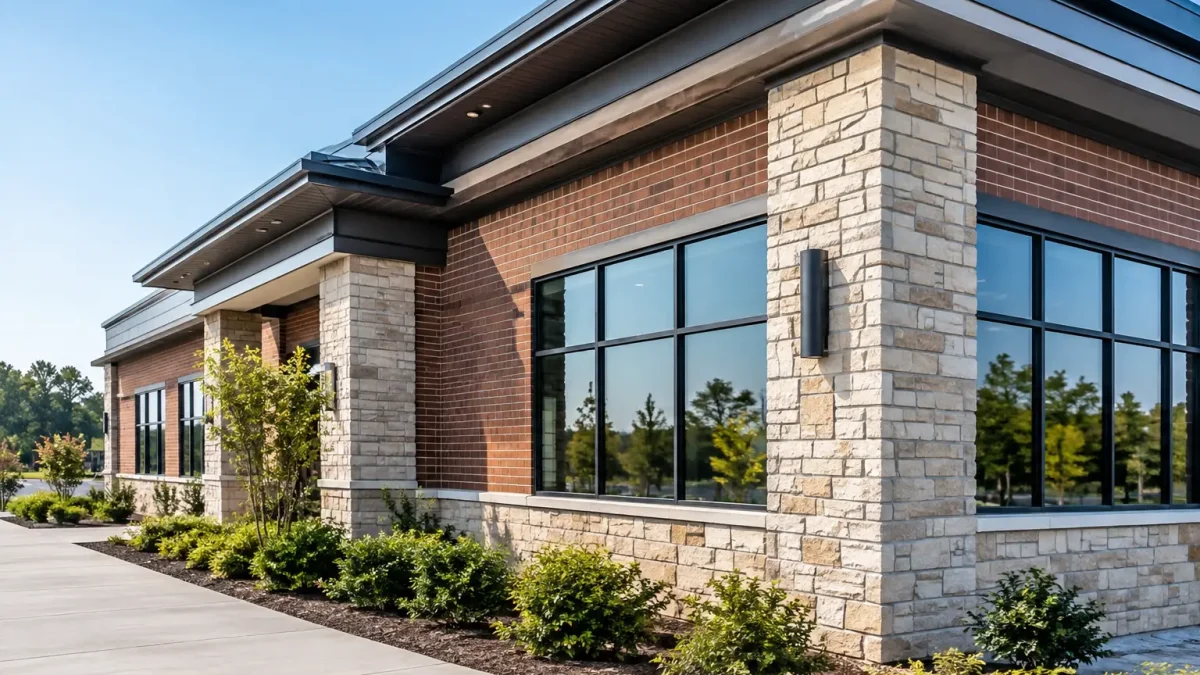
A loose brick at a storefront, a cracked block wall behind a loading area, or failing mortar around an entry can quickly become more than a cosmetic problem. This commercial masonry project example shows how a well-planned repair and reconstruction project can protect a property, maintain a professional appearance, and reduce the risk of larger water-related issues later.
For commercial owners and property managers, masonry work needs to do more than look good on completion day. It needs to hold up to weather, daily use, tenant activity, and the demands of a busy property. The right scope, materials, and workmanship make that possible.
Commercial Masonry Project Example: A Failing Brick Entry Wall
Consider a small professional office building with a brick entry wall and raised planter areas near the main entrance. Over time, sections of mortar had worn away, several bricks had shifted, and water was finding its way behind the face brick. The entry still functioned, but the deterioration was visible to every client, tenant, and visitor walking through the front door.
The property owner needed a solution that addressed the cause of the damage, not a quick cosmetic patch. They also needed the work completed with safe access to the building and as little disruption to office traffic as possible.
The Initial Site Review
A proper masonry project begins by identifying why the wall is failing. In this example, the visible damage included cracked mortar joints, loose brick, and staining near the base of the wall. Those symptoms pointed to a combination of moisture exposure, aging mortar, and poor drainage around the planter area.
The contractor’s site review focused on the condition of the brick, the wall structure behind it, the condition of the mortar joints, and where water was entering or collecting. This step matters because repointing mortar alone would not correct a wall that had shifted or brick that had already lost its bond.
The scope was built around selective removal of unstable material, masonry rebuilding where needed, new flashing and drainage details, and a clean finish that matched the building’s existing appearance as closely as practical.
Planning Around an Active Property
Commercial masonry work rarely happens in an empty space. The entry remained in use throughout the project, so work zones had to be clearly separated and kept orderly. Materials were staged away from pedestrian routes, and the project was scheduled in phases so one access point remained available.
This is where a commercial project differs from a simple residential repair. Property managers must consider tenant access, delivery times, customer traffic, parking, building rules, and other trades working nearby. Clear communication before work begins prevents avoidable delays and keeps everyone on the same page.
Building the Right Scope for the Wall
The project required more than replacing a few damaged bricks. The affected portion of the wall was carefully taken back to sound masonry, giving the new work a stable base. Matching brick was selected to complement the original wall, with the understanding that older brick can vary in color and texture after years of weathering.
New masonry units were installed with properly selected mortar. Mortar choice is not a minor detail. Mortar that is too hard for older brick can contribute to future damage, while mortar that is too weak may not provide the durability needed for a high-traffic commercial entry. The right mix depends on the existing material, wall condition, exposure, and structural requirements.
Behind the rebuilt section, moisture-management details were added to direct water outward instead of trapping it behind the face brick. Depending on the wall design, that may include flashing, weep openings, drainage material, and properly formed joints. These details are mostly hidden once the job is complete, but they are often what separates a lasting repair from one that needs attention again too soon.
The planter area was also evaluated. Soil, irrigation, and standing water against masonry can accelerate deterioration. In some cases, adjusting the surrounding grade or improving drainage is just as valuable as rebuilding the visible wall.
Workmanship That Holds Up Beyond the Final Walkthrough
Once the repair area was prepared, the masonry was rebuilt in stages. Brick lines, joint spacing, corners, and transitions to the existing wall were checked throughout the installation. On a commercial facade, small inconsistencies can stand out quickly, especially around an entrance that visitors see up close.
The crew also protected nearby finishes and maintained a clean work area at the end of each day. That level of care is practical, not just cosmetic. Loose debris near an active entry can create safety concerns, while poor protection can leave adjacent concrete, landscaping, doors, or glass needing unnecessary cleanup or repair.
After the new brickwork was in place, joints were finished to match the existing profile as closely as possible. Mortar was allowed to cure properly before final cleaning. Rushing this stage can affect the appearance of the joints and leave residue on the face of the brick.
For a project like this, weather matters. Southeastern Pennsylvania’s freeze-thaw cycles can be tough on exterior masonry, particularly where water is already entering joints or sitting near the base of a wall. Scheduling and protection procedures should account for temperature, rain, curing conditions, and the condition of the existing structure.
What a Successful Commercial Masonry Repair Looks Like
The finished entry wall should look clean, straight, and appropriate for the building, but appearance is only part of the result. A successful project also restores stable masonry, improves resistance to water intrusion, and gives owners confidence that the work was performed with the full condition of the wall in mind.
For this type of office property, the repair also improves curb appeal. A maintained entrance tells tenants, clients, and visitors that the property is cared for. That can support leasing efforts, tenant satisfaction, and the long-term presentation of the building.
It is worth recognizing the trade-off between a localized repair and a broader rebuild. If damage is confined to a small area and the surrounding masonry is sound, targeted work can be a smart investment. If widespread cracking, water intrusion, or structural movement is present, a larger scope may be the more cost-effective choice over time. A thorough site evaluation helps make that decision based on facts instead of surface appearance.
Questions to Ask Before Scheduling Commercial Masonry Work
Before approving a proposal, commercial property owners should understand what is causing the damage, what materials will be used, and how the work will affect building access. Ask whether flashing, drainage, or surrounding site conditions need attention along with the visible masonry. Also ask how the work area will be protected and how the contractor will communicate schedule updates.
A detailed scope does not mean every project will be complicated. It means the work has been considered from the first brick to the final cleanup. That is especially valuable for property managers coordinating tenant needs, owners protecting a long-term investment, and general contractors looking for dependable masonry support.
Provato Concrete and Masonry and Grindin LLC brings that practical, detail-focused approach to commercial brick, block, stone, and exterior masonry projects throughout the Main Line and surrounding Pennsylvania communities. If your building has deteriorating brickwork, damaged mortar, failing entry walls, or masonry that no longer reflects the quality of your property, schedule an online estimate and start with a clear plan for the work ahead.
The best time to address masonry damage is while the repair is still manageable. A professional evaluation can turn an uncertain wall into a clear path toward a stronger, cleaner-looking property.