
Stone Veneer Benefits for Lasting Curb Appeal
October 21, 2026
Brick Pointing: Protect Your Masonry Investment
October 25, 2026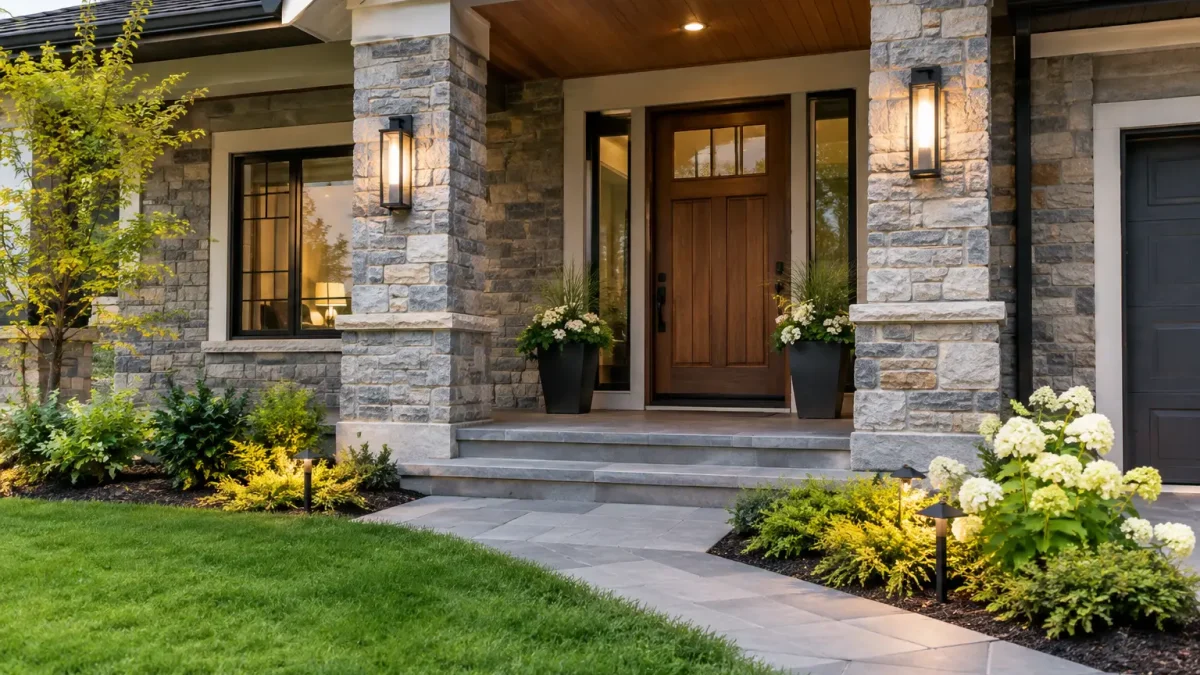
A front entry can lose its impact fast when the steps are chipped, the walkway is uneven, or the brickwork looks tired. The best masonry upgrades for curb appeal solve those visible problems while giving your property a more finished, welcoming appearance. Done well, they also improve how people move through the space, manage water, and enjoy the exterior for years to come.
For homeowners on Philadelphia’s Main Line and throughout the surrounding Pennsylvania communities, masonry is more than a decorative detail. It is a long-term exterior investment that needs to stand up to changing temperatures, rain, snow, and everyday use. The right upgrade should look like it belongs with the home, not like an afterthought added years later.
Why Masonry Carries So Much Curb Appeal
Masonry creates the details people notice at street level: the route from the driveway to the front door, the scale of the entry, the condition of the steps, and the edges that define planting beds or a front patio. Those elements shape the first impression before a visitor ever sees the interior.
It also gives a property visual weight. Natural stone can make a traditional home feel established and refined. Brick can tie a new improvement to an existing facade. Concrete with a quality finish can deliver a clean, durable look that works especially well with updated or more contemporary homes. Material selection matters, but proportion, drainage, and installation quality matter just as much.
7 Best Masonry Upgrades for Curb Appeal
1. Rebuild Worn Front Steps and Landings
Front steps are one of the highest-impact places to invest because they sit at the center of the entry. Settling, cracking, loose units, and uneven risers make a home look neglected and can create a safety concern. A rebuilt masonry stair and landing gives the entrance a solid, intentional foundation.
The best material depends on the house. Brick steps can complement a brick colonial, while natural stone treads and a stone-faced base create a strong fit for homes with a more classic or rustic exterior. Concrete steps are a practical choice when a clean profile, durability, and budget control are priorities. The key is proper base preparation and drainage so the finished work holds its alignment through freeze-thaw cycles.
2. Install a Defined Front Walkway
A front walkway should make reaching the door feel natural. A narrow, cracked, or poorly placed path can make even a well-kept landscape look disconnected. Replacing it with a properly sized concrete, brick, or stone walkway gives the entire front yard better structure.
Straight walkways tend to suit formal facades and smaller lots. A gentle curve can soften a broader lawn and create a more relaxed approach. Stone offers strong character, while concrete can be finished in a range of textures and colors. Whichever direction you choose, the walkway should have enough width for two people to walk comfortably and should slope correctly to move water away from the home.
3. Add a Low Stone Retaining or Garden Wall
A low retaining wall can turn an awkward grade change into a polished landscape feature. It creates clean planting areas, defines the edge of a front yard, and gives sloped properties a more organized appearance. For homes with an elevated entry, a wall can also help visually connect the steps to the surrounding yard.
Natural stone walls bring depth and texture, especially where the property already has mature trees or traditional architecture. Brick walls can coordinate with an existing facade, while block systems with a masonry finish may be a practical choice for certain grades and budgets. Retaining walls are structural work, not just landscaping, so drainage behind the wall and a stable base are essential.
4. Restore or Upgrade Brickwork at the Facade
Sometimes curb appeal does not require a completely new feature. Repairing deteriorated mortar joints, replacing damaged brick, and correcting areas of failed masonry can make the front of a property look cared for again. This is particularly valuable on older homes where original brickwork is one of the building’s best architectural assets.
Matching brick color, size, texture, and mortar profile takes a careful eye. A patch that is structurally sound but visibly mismatched can distract from the whole facade. In some cases, targeted restoration is the smarter investment. In others, adding a brick or stone accent around an entry, foundation area, or porch base provides the visual change the property needs.
5. Create Entry Pillars and a Stronger Front Boundary
Masonry pillars can give a driveway entrance, front walk, or gate a finished sense of arrival. They work especially well on wider properties where the house sits back from the road. A pair of brick or stone pillars can define the entry without closing off the landscape.
This upgrade should stay in scale with the home. Oversized pillars can overwhelm a modest facade, while undersized ones may look disconnected from the driveway or wall they support. Consider coordinating the cap material, brick, or stone with the house and nearby hardscape features for a consistent result.
6. Upgrade the Driveway Apron and Edging
The driveway often occupies a large share of the front view, which makes its condition hard to ignore. A crumbling apron, broken edge, or poorly draining transition can pull attention away from an otherwise attractive property. Replacing damaged concrete at the driveway entrance or adding durable masonry edging can sharpen the entire presentation.
This improvement is less flashy than a stone walkway, but it has real value. It creates cleaner lines, helps define adjacent landscape beds, and makes the approach feel maintained. For the best outcome, the new work should be planned with the driveway slope and nearby drainage in mind rather than treated as an isolated repair.
7. Add a Small Front Patio or Seating Wall
A compact front patio, porch extension, or curved seating wall can make a property feel more welcoming and usable. This is an excellent choice for homeowners who enjoy sitting outside, talking with neighbors, or creating a more gracious transition between the public sidewalk and front door.
A modest stone or concrete sitting area is often enough. The goal is not to crowd the front yard with hardscape. It is to create a balanced outdoor space that complements the house. Low masonry seating walls can also frame plantings and provide function without requiring extra furniture.
Choosing the Best Masonry Upgrades for Your Home
Start with the feature in the poorest condition or the one visitors use first. For many homes, that is the front walk or entry steps. If both are in good shape, look at elements that improve definition, such as a low wall, pillars, or a masonry-edged planting bed.
Next, consider the architectural style and the materials already on the property. A historic brick home may benefit from carefully matched brick repairs and traditional stone accents. A newer home may look best with clean concrete, straight lines, and limited color variation. Mixing too many materials can make an exterior feel busy, so choose one primary material and one complementary accent whenever possible.
Budget should guide the scope, not force shortcuts in the installation. A smaller, professionally built walkway or step replacement is usually a better investment than a larger project with weak base preparation, poor drainage, or rushed finishing. Quality masonry is built from the ground up.
Build for Pennsylvania Weather, Not Just Opening Day
A beautiful surface is only part of the job. In southeastern Pennsylvania, masonry must handle freeze-thaw movement, seasonal moisture, and regular foot traffic. That means a stable base, proper jointing, appropriate materials, and drainage that directs water where it belongs.
Maintenance also deserves consideration. Natural stone and brick develop character over time but may need periodic cleaning and joint repair. Concrete offers a versatile, durable surface, though its finish and control joints should be planned carefully. The right choice depends on the look you want, the maintenance you are comfortable with, and how the space will be used.
A well-planned masonry project should make your property look stronger from the street and work better every day. If you are ready to improve your entry, walkway, walls, or exterior stonework, schedule an online estimate with Provato Concrete and Masonry and Grindin LLC and start building an exterior you will be proud to come home to.