

Concrete Grinding for Safer, Better Surfaces
November 18, 2026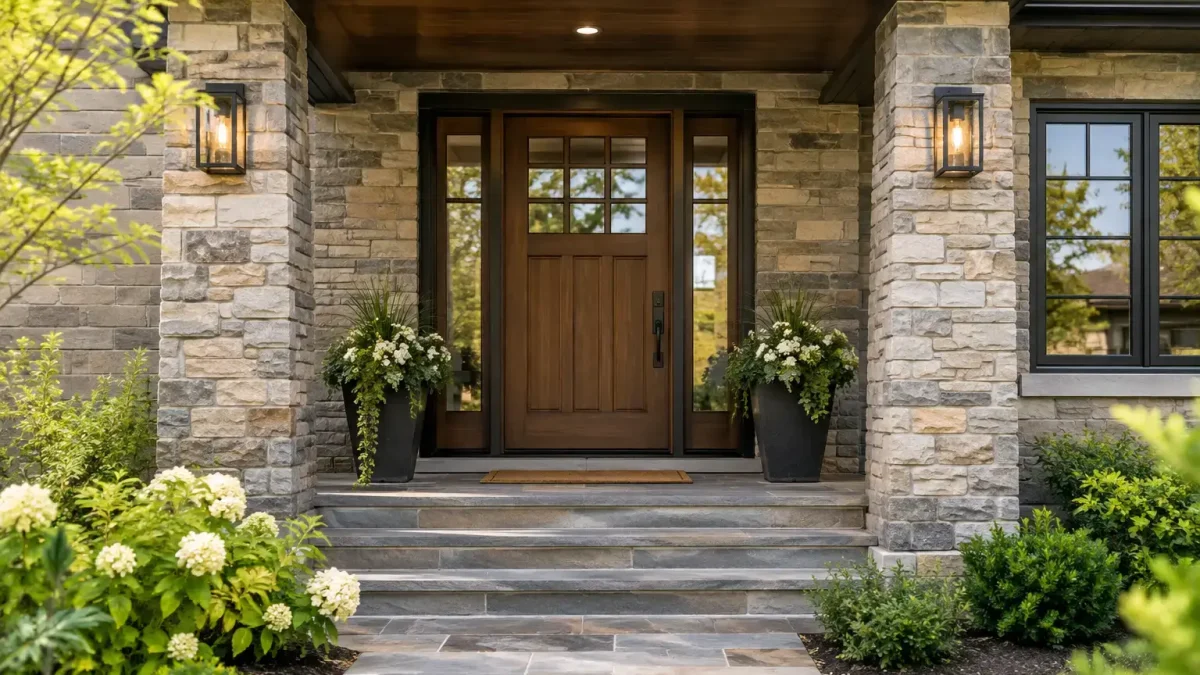
A front entry should do more than lead guests to the door. It should create a safe, durable transition from driveway or sidewalk to home while giving the property a finished, welcoming look. The right entryway stonework ideas can solve practical issues like uneven grades, water runoff, worn concrete, and slippery steps while adding real curb appeal that lasts.
For homes across the Main Line and surrounding Pennsylvania communities, stonework needs to stand up to changing seasons, freeze-thaw cycles, and daily foot traffic. That is why material selection, proper base preparation, drainage, and skilled installation matter just as much as the final pattern or color.
1. Natural Stone Front Steps
Natural stone steps are a strong choice for traditional homes, stone-faced properties, and upscale renovations. Bluestone, Pennsylvania fieldstone, limestone, and granite each bring a distinct character. Bluestone offers a clean, tailored appearance, while fieldstone has more texture and a relaxed, natural look.
The best choice depends on the architecture and how formal you want the entry to feel. Large thermal-finished bluestone treads can create crisp, substantial steps at a Colonial or Tudor-style home. Irregular stone steps work well where the landscape is softer and more organic. In either case, consistent riser heights, solid foundations, and secure setting are essential for safe, comfortable use.
2. Bluestone Landing With Brick Borders
A bluestone landing framed with brick is one of the most dependable entryway stonework ideas for homes that already feature brick masonry. The contrast gives the front door a defined focal point without competing with the rest of the facade.
Brick borders also help establish the shape of the landing and connect it visually to nearby walkways, porch columns, or retaining walls. Choose brick colors that complement the existing exterior rather than trying to match aged brick perfectly. A close, intentional blend generally looks better than a new material that almost matches but does not.
3. Flagstone Walkway to the Front Door
A flagstone walkway makes the trip from curb, driveway, or front walk feel more considered. It can be installed in a formal cut pattern or in irregular pieces for a more natural presentation. Wider joints may be filled with mortar, stone dust, or a carefully selected joint material, depending on the design and installation method.
This option works especially well for homes with mature landscaping. The stone’s color variation can complement planting beds, foundation shrubs, and established trees. For a cleaner appearance, use a defined edge in brick, granite, or steel. For a more informal garden approach, let the stone remain the primary visual element.
4. Stone Veneer Around the Entry
Not every project requires rebuilding the entire porch or front elevation in full-depth stone. Quality stone veneer can add depth around the front door, columns, or lower portion of a porch while keeping the project focused.
Veneer is often a smart fit when the existing entry is structurally sound but lacks visual weight. A stone surround can make a standard front door feel more substantial and tie the entry to a retaining wall, walkway, or other masonry feature. The key is proportion. Covering a small area with an overly busy stone can feel crowded, while a balanced application creates a purposeful upgrade.
5. Raised Stone Planters at the Walkway
Low stone planters bring structure to an entry without closing it in. They can frame a front walk, soften the base of porch steps, or guide visitors toward the door. Built at a comfortable height, they also reduce the need to bend for seasonal planting and make flowers, evergreens, or ornamental grasses more visible from the street.
Keep the planters scaled to the house and the walkway. A narrow path flanked by oversized walls can feel restrictive. Proper drainage behind and beneath the masonry is equally important, especially when soil and moisture sit against the structure through winter.
6. Stone-Capped Front Porch Walls
If your porch has low brick, block, or stucco walls, a natural stone cap can give the entire entry a more finished appearance. Caps provide a durable top surface, help direct water away from the wall, and offer a clean place for planters or seasonal decor.
Bluestone and granite are common options because they are strong and well suited to exterior exposure. The cap should have a slight pitch so rainwater does not sit along the wall. Small details like overhang, drip edges, and properly finished joints are what protect the masonry below.
7. A Stone Threshold and Door Surround
For a smaller project with a noticeable impact, focus directly on the front door. A stone threshold, side surrounds, or a modest header can sharpen the entry’s appearance without changing the whole facade.
This approach works well when the door itself is a focal point, such as a painted wood door, custom glass door, or dark steel entry door. Stone adds texture and permanence around it. It is also a practical opportunity to address aging or cracked materials near the threshold before water finds its way into vulnerable joints.
8. Curved Stone Steps for a Softer Approach
Straight steps are classic and efficient, but a gentle curve can give a wider front entrance a more welcoming feel. Curved stone steps work best when there is enough room for the shape to read clearly. On a narrow entry, forcing a curve can make the area look cramped.
This design is often paired with curved planting beds or a circular driveway approach. Because curved steps require careful layout and precise cutting, they are a project where experienced masonry workmanship makes a visible difference. The finished steps should still provide uniform footing and a clear, natural path to the door.
9. Mixed Stone and Concrete Entry Features
Stone and concrete do not need to compete. A concrete landing or walkway can provide a clean, durable field surface, while stone steps, borders, caps, or veneer add character at key points. This combination can be a practical way to manage the budget while still creating a custom look.
For example, a finished concrete walk leading to bluestone front steps offers dependable performance and a polished transition. The materials should be planned together so elevations, drainage, colors, and edge details look intentional. A pieced-together approach rarely delivers the same result.
10. Stone Accent Walls With Lighting
A short stone wall near the entry can do more than define a grade change. It can create a location for address numbers, a mailbox, landscape lighting, or a small seating edge. When lighting is incorporated thoughtfully, it improves visibility at the steps and makes the entry feel inviting after dark.
Avoid placing lights where they shine directly into guests’ eyes or create glare on wet stone. Low, warm lighting aimed at the walking surface and architectural details is usually the better choice. Any electrical components should be coordinated before masonry construction begins.
11. Dry-Laid Stone for a Natural Landscape Entry
Dry-laid stone uses carefully fitted stone without visible mortar joints on the face. It has a timeless, handcrafted look that works beautifully with cottage-style homes, wooded lots, and informal landscape designs.
This style is not right for every entry. A formal home with crisp brickwork may benefit more from cut stone and clean mortar joints. But where the setting calls for texture and a connection to the landscape, dry-laid stone walls, edging, and steps can feel as though they have always belonged there.
12. A Complete Stone Entry Sequence
The most striking entries often combine a few elements instead of relying on one feature alone. A coordinated sequence might include a stone-edged walkway, a generous landing, solid steps, capped porch walls, and subtle planting areas. Each piece has a purpose, and together they create a clear approach to the front door.
This is also the best route when the existing entry has several issues at once, such as cracked surfaces, awkward step layout, poor drainage, or an undersized landing. Planning the entire sequence allows the finished work to function properly rather than simply covering one visible problem.
What to Consider Before Choosing Entryway Stonework
Start with how people actually use the entrance. Consider the number of steps, the slope from driveway to door, the width needed for guests, package deliveries, and everyday traffic. A beautiful entry that feels tight, slippery, or uneven will not deliver the long-term value homeowners expect.
Drainage deserves equal attention. Water should move away from the house, not collect on the landing or run toward the foundation. In Southeastern Pennsylvania, moisture that enters joints or settles beneath stone can create larger problems as temperatures rise and fall through the year.
Material maintenance is another trade-off. Natural stone has a premium appearance and excellent durability, but its color variation and texture should be selected carefully. Smooth stone may suit a modern design, yet a more textured finish can provide better traction in areas exposed to rain, snow, and ice. A qualified masonry contractor can help match the material and finish to the property, the exposure, and the intended use.
A front entry is one of the first places people notice and one of the last places you want to repair twice. Whether you are planning a simple stone landing or a complete approach with steps, walls, and walkways, schedule an online estimate with Provato Concrete and Masonry and Grindin LLC to build an entry that looks right, drains right, and is built to last.