
A Sloped Yard Patio Project Example Built Right
November 2, 2026
Building Removal Permit Guide for Property Owners
November 6, 2026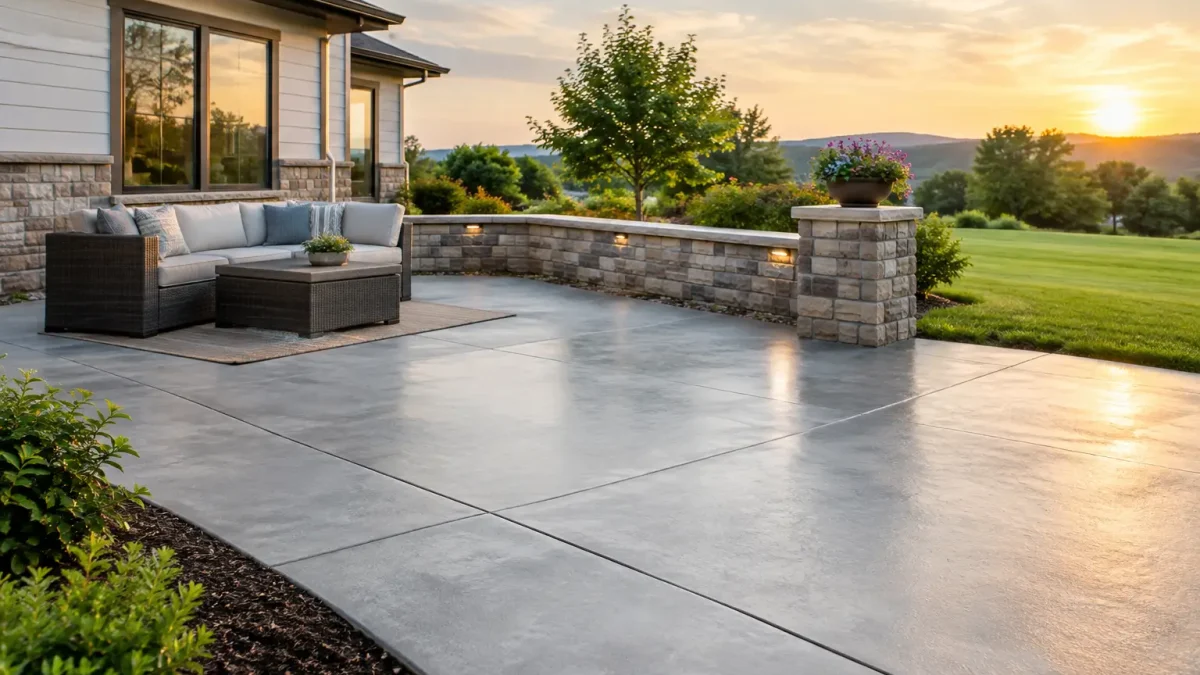
A concrete surface can be structurally sound and still be the wrong fit for how you use your property. The best concrete finishes outdoors balance traction, appearance, maintenance, and the demands of Pennsylvania weather. A finish that looks great around a pool may not be practical for a sloped driveway, and a decorative patio surface needs a different level of grip than a front walkway.
For homeowners and property managers, the right decision starts with the location. Sun exposure, drainage, foot traffic, vehicles, snow removal, and the style of the home all affect which finish will perform well over time. A professional installation matters just as much as the final texture. Proper base preparation, concrete placement, joint layout, finishing timing, and curing are what help an outdoor surface stay attractive and dependable.
Choosing the Best Concrete Finishes Outdoors
There is no single finish that is best for every exterior project. The strongest choice is the one that fits the surface’s job, complements the property, and can be maintained realistically. For many Main Line-area homes, that also means choosing a finish that handles freeze-thaw cycles, rain, deicing products, and seasonal temperature swings.
Broom Finish: The Dependable Everyday Choice
A broom finish is one of the most practical options for exterior concrete. While the concrete is still workable, a specialized broom is pulled across the surface to create fine, consistent ridges. Those ridges improve traction when the surface is wet, making this finish especially well suited to driveways, sidewalks, front walks, steps, utility areas, and simple patios.
Its value is not just in its price point. A well-executed broom finish has a clean, purposeful appearance that works with nearly any home style. It does not compete with landscaping or architecture, and it is easier to keep clean than heavily textured surfaces.
The trade-off is visual simplicity. If you are creating a backyard entertaining space where design is the priority, a standard broom finish may feel more functional than distinctive. It can still look excellent, particularly with thoughtful control joints, a clean edge detail, or integral color, but it is not intended to imitate natural stone.
Exposed Aggregate: Texture With Character
Exposed aggregate reveals the small stones within the concrete mix, creating a textured surface with a natural, high-end look. It is a strong option for patios, pool surrounds, walkways, and entry areas where homeowners want more visual interest without using individual pavers or stone.
Because the aggregate creates texture, it generally offers good traction. The variation in color and stone also helps hide dust, minor staining, and everyday wear better than a uniform gray surface. Each installation has its own character based on the selected aggregate, which can range from subtle and refined to bold and decorative.
This finish requires careful workmanship. The surface paste must be removed at the right time to expose the stone without weakening the slab or leaving an uneven result. It also needs sound drainage and a good sealer to help protect the exposed material from weather and staining. In areas where shoveling is common, use plastic shovels or equipment with protective edges to avoid chipping the surface.
Stamped Concrete: A Decorative Patio Statement
Stamped concrete is designed for homeowners who want the visual effect of stone, slate, brick, wood planks, or tile with the continuity of a concrete slab. It is most often used for patios, outdoor living spaces, walkways, courtyards, and select entry areas. With the right pattern and color, stamped concrete can make a new outdoor space feel tailored to the home rather than added as an afterthought.
The best stamped work is not about choosing the busiest pattern. It is about scale, color, and realism. A pattern should suit the size of the patio and the architecture around it. Earth tones tend to blend naturally with stone facades, brick, mature landscaping, and established neighborhoods, while restrained color variation can add depth without looking artificial.
Stamped concrete does have trade-offs. It typically costs more than a broom finish because the process is more labor-intensive and detail-driven. Some stamp patterns can be slick when wet if they are too smooth or heavily sealed. For that reason, exterior stamped surfaces should be planned with traction in mind, especially near steps, doors, slopes, and pools. A properly selected non-slip additive in the sealer can help, but it should not be treated as a substitute for appropriate surface texture and drainage.
Salt Finish: Subtle Texture for Relaxed Outdoor Spaces
A salt finish creates a lightly pitted surface by pressing rock salt into fresh concrete and washing it away after the slab begins to set. The result is a small, irregular texture that feels less formal than a broom finish and less pronounced than exposed aggregate.
This option can work nicely for patios and poolside areas where bare-foot comfort and slip resistance both matter. It has a clean, understated appearance and does not require a decorative pattern to look finished.
It is not the first choice for every property. The small surface voids can collect dirt and may require more attentive cleaning. In Pennsylvania’s winter conditions, the finish should be installed and maintained carefully to support long-term durability. It is generally better suited to spaces with thoughtful drainage and lighter winter use than to a heavily traveled front walkway or driveway.
Smooth and Troweled Finishes: Use With Caution Outdoors
A smooth, hard-troweled concrete surface can look crisp and modern, but it is usually not the right answer for exposed outdoor walking areas. Its low texture can become slippery with rain, leaves, snow, or ice. That concern increases on slopes, near exterior doors, and anywhere people regularly walk in wet shoes.
There are exceptions. A smoother finish may work in a covered area with limited weather exposure or as part of a design that includes a separate traction treatment. Even then, it should be discussed honestly before installation. Attractive concrete should never come at the expense of safe everyday use.
Match the Finish to the Surface
For a driveway, a broom finish is often the most sensible choice because it provides reliable traction, handles regular vehicle use well, and keeps the look neat. Exposed aggregate can also be a good fit for driveways when installed correctly, though it is typically chosen when curb appeal is a larger priority.
For patios, the choice is more personal. Broom-finished concrete gives a clean, durable foundation for furniture, grills, and family gatherings. Stamped concrete brings decorative impact. Exposed aggregate offers texture and a more natural look. The best option depends on whether you want the patio to quietly support the yard or serve as the centerpiece of the outdoor living space.
For sidewalks and front entries, safety and drainage should lead the conversation. Broom finishes are a reliable standard. Exposed aggregate can provide a more elevated appearance while retaining texture. Avoid overly smooth finishes on front approaches, where wet weather and winter conditions can make a minor design decision a daily inconvenience.
Color, Joints, and Edges Matter More Than Most People Expect
Finish texture gets most of the attention, but the details around it shape the final result. Integral color is mixed throughout the concrete and can give patios, walks, and driveways a warmer appearance than standard gray. It is generally more durable than a surface-only color because the color runs through the slab, though every colored concrete surface will still benefit from proper care.
Control joints are another key design and performance feature. Concrete naturally shrinks as it cures, and joints help guide that movement into planned lines rather than random cracks. On decorative work, joint placement should be considered before concrete is placed so the layout looks intentional. A skilled crew can use joints to frame a patio, align with steps, or support a stamped pattern instead of treating them as an afterthought.
Clean edges and well-planned transitions also make a difference. The connection between a patio and a door threshold, lawn, garden bed, or existing walkway should drain properly and look finished from every angle.
Protecting an Outdoor Concrete Finish
Even the right finish needs reasonable care. Keep leaves, soil, and standing water from sitting on the surface for extended periods. Use deicing products cautiously, especially during the first winter after installation, when new concrete is still gaining strength. Products containing ammonium nitrates or ammonium sulfates can be particularly harsh on concrete. Sand is often a safer choice for added winter traction.
Sealing needs depend on the finish and exposure. Decorative finishes and exposed aggregate commonly benefit from periodic sealing to preserve color and help resist moisture and stains. A driveway may need attention sooner than a sheltered patio because of vehicle traffic, road salts, and weather exposure. The right maintenance schedule depends on the sealer used, the surface condition, and how the area is used.
At Provato Concrete and Masonry and Grindin LLC, we help property owners choose finishes that look right on day one and make sense for the years ahead. Before selecting a pattern or texture, consider how you will walk, park, entertain, clean, and live on the surface. Then schedule an estimate with a contractor who will build the details around your property, not force your property into a one-size-fits-all solution.