
How to Maintain Stone Veneer and Keep It Looking New
November 8, 2026
Demolition Versus Renovation Decision Made Clear
November 12, 2026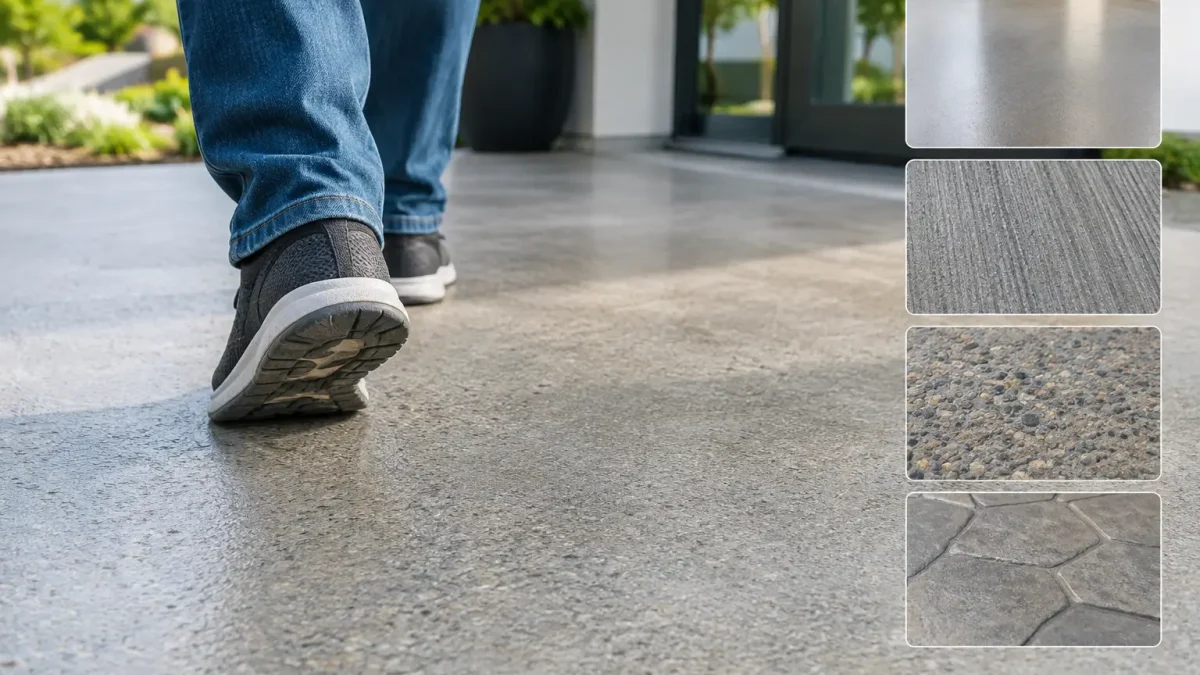
A wet patio should not become the part of your property everyone has to tiptoe across. When homeowners and property managers ask which concrete finish prevents slipping, the best answer is usually not a glossy sealer or a decorative pattern. It is a properly installed textured finish matched to the space, drainage, foot traffic, and local weather.
For most driveways, sidewalks, patios, and exterior steps in Southeastern Pennsylvania, a broom finish is the dependable starting point. Exposed aggregate can provide even more traction while adding a more decorative look. The right choice depends on where the concrete will be used and how much maintenance you are prepared to give it.
Which Concrete Finish Prevents Slipping Most Reliably?
A broom-finished concrete surface is the most practical slip-resistant choice for many exterior concrete projects. After the concrete is placed and leveled, a contractor pulls a specialized broom across the surface at the proper time. This creates fine, consistent ridges that give shoes, tires, and mobility devices better grip.
The key is balance. Texture that is too light can become slick when wet. Texture that is too aggressive can be uncomfortable on bare feet, difficult to shovel, and harder to clean. Skilled finishing creates enough traction for daily use without making the surface rough or uneven.
A broom finish works especially well for driveways, front walks, sidewalks, service areas, and utility paths. It has a clean, straightforward appearance that fits nearly any home or commercial property. It also performs well through rain, fallen leaves, winter moisture, and the freeze-thaw conditions common around the Main Line and nearby communities.
Why Smooth Concrete Can Be a Problem Outside
Smooth-finished concrete has its place, but exterior walking surfaces are not usually it. A hard-troweled surface can look sleek, yet it closes the concrete surface and reduces texture. Add rain, pool water, snowmelt, or a thin layer of ice, and traction drops quickly.
This does not mean every smooth-looking slab is automatically unsafe. Slope, drainage, surrounding landscaping, footwear, and regular cleaning all affect slip resistance. Still, when a surface will be exposed to the weather and used regularly on foot, intentional texture is the safer decision.
A finish cannot overcome poor drainage. Water should move away from the house and avoid settling in low spots. Correct pitch, well-planned joints, and clean drainage paths are as important as the concrete texture itself. A textured patio that holds water is not performing as well as it should.
Broom Finish vs. Exposed Aggregate
Broom finish and exposed aggregate are both strong options, but they serve different priorities.
Broom-Finished Concrete
Broom-finished concrete is the reliable workhorse. It is cost-effective, easy to maintain, and suitable for most exterior applications. The finish can be applied in a direction that supports the way people travel across the surface. For example, traction lines are often placed perpendicular to the primary walking direction on a walkway or steps.
This finish is a smart fit for homeowners who want a clean, durable driveway or patio without making the finish itself the visual centerpiece. It is also a practical choice for commercial entrances, walkways, and areas with frequent foot traffic.
Exposed Aggregate Concrete
Exposed aggregate reveals decorative stone near the top of the concrete surface. The visible aggregate creates natural texture and can provide excellent traction, making it popular around pools, patios, garden walks, and higher-end outdoor living spaces.
It offers more color and visual character than a standard broom finish, but it requires careful installation. Aggregate selection, concrete placement, surface exposure, curing, and sealing all influence the final result. A poorly exposed surface can feel uneven, shed stones, or become more difficult to maintain.
Exposed aggregate generally costs more than broom-finished concrete. It can be worth the investment where appearance and traction both matter, but it may not be necessary for a simple front sidewalk or functional driveway.
Other Concrete Finishes and Their Slip Resistance
Several other finishes are available, though they should be selected with care for exterior spaces.
Stamped concrete can resemble stone, brick, slate, or wood. It can be attractive for patios and walkways, but stamped concrete often receives a sealer that changes how the surface feels underfoot. If stamped concrete is chosen for an outdoor area, the finish should include suitable texture and a slip-resistant additive in the sealer where appropriate. A smooth, heavily sealed stamped patio may look great but offer less wet-weather grip than broom-finished concrete.
Salt-finished concrete creates small, shallow pits after rock salt is pressed into fresh concrete and later washed away. It can offer traction and a distinctive appearance, particularly around pool decks. However, the texture is not ideal for every application, and the finish must be executed correctly to avoid a weak or inconsistent surface.
Concrete pavers and natural stone are not technically concrete finishes, but they are often considered when traction is a concern. Their joint lines and natural texture can improve grip. They also come with different installation, maintenance, and settlement considerations than a poured concrete slab.
The Sealer Matters More Than Many Owners Realize
Even the best textured surface can lose traction if the wrong sealer is applied. Some film-forming sealers leave a glossy appearance that may become slick when wet, especially on patios, steps, and pool-adjacent areas.
That does not mean concrete should never be sealed. Quality sealers help protect concrete against moisture, stains, and seasonal wear. The important step is choosing the right product and finish for the surface. For exterior areas where safety matters, a penetrating sealer or a properly selected sealer with a slip-resistant additive is often the better approach.
Before sealing an existing patio or walkway, consider how the area is used. A decorative finish near a grill or seating area has different needs than front entry steps used daily by family members, guests, delivery drivers, and maintenance crews.
Choosing the Right Finish for Each Area
A driveway needs tire traction, durability, and easy snow removal. A standard broom finish is usually the best fit. Its modest texture supports traction without becoming overly difficult to shovel or sweep.
A front walkway and exterior steps should prioritize safe footing. Broom texture is a strong choice, with careful attention to slope, drainage, and consistent step dimensions. Handrails may also be appropriate depending on the layout and elevation change.
A backyard patio is where style may influence the decision more heavily. Broom-finished concrete can still look sharp, especially with clean joint layouts, borders, or integral color. Exposed aggregate can elevate the appearance while maintaining traction. Stamped concrete can work as well, provided the texture and sealer are selected for wet conditions.
For commercial properties, the right finish should account for expected traffic, accessibility, cleaning needs, entrances, and exposure to weather. A finish that looks impressive but creates a maintenance or safety concern is rarely the right long-term choice.
Installation Quality Determines Long-Term Safety
No finish performs its best if the concrete underneath is poorly prepared. Proper base work, reinforcement where needed, concrete mix design, joint placement, finishing timing, curing, and drainage all shape the durability of the finished slab.
Texture should be applied consistently, not rushed in after the concrete has begun setting too far. Edges, steps, transitions, and drainage points deserve special attention because they are common places for water to collect and footing to change.
At Provato Concrete and Masonry and Grindin LLC, we help property owners choose concrete finishes that look right, function well, and stand up to real use. Whether you are planning a new patio, driveway, walkway, or exterior steps, the goal is the same: a finished surface you can feel confident using in every season.
If your current concrete feels slick, has standing water, or no longer fits the way you use your property, schedule an online estimate to discuss a safer, better-finished surface built for your space.