
Which Concrete Finish Prevents Slipping Best?
November 10, 2026
Masonry Maintenance Guide for Pennsylvania Properties
November 14, 2026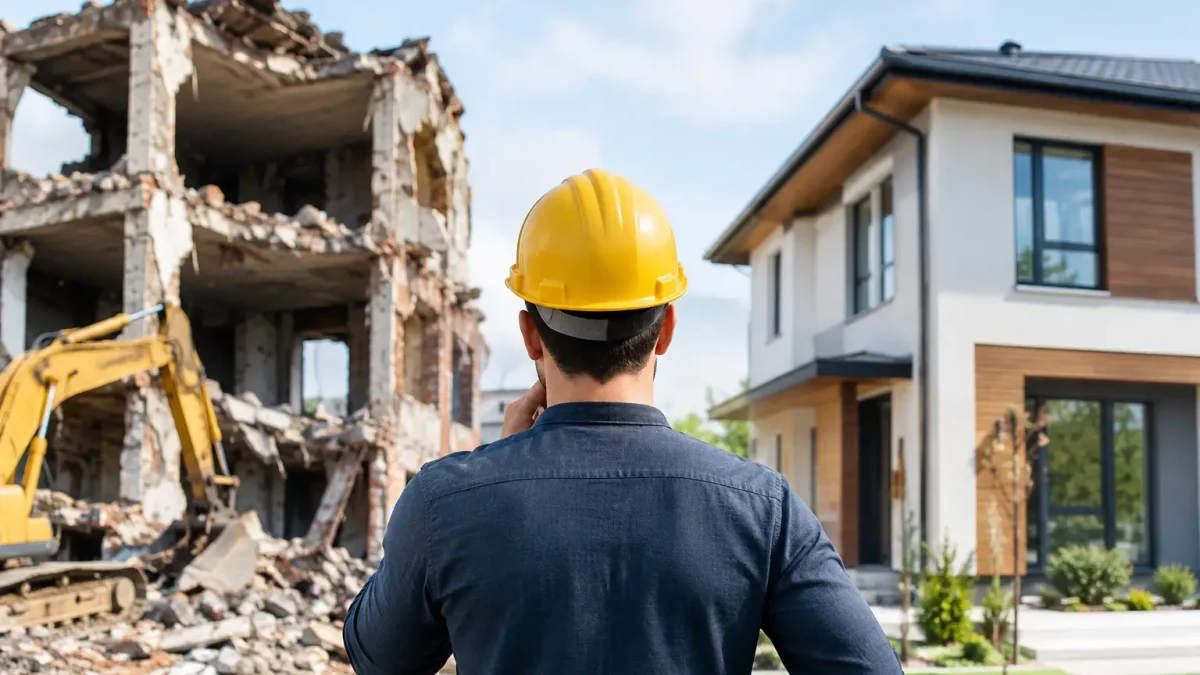
A cracked foundation wall, failing driveway, water-damaged masonry, or outdated commercial space can force a difficult call: repair what is there or start fresh. A demolition versus renovation decision is not simply about choosing the lower estimate. It is about understanding the condition of the structure, the purpose of the property, the work required beneath the surface, and the value you expect from the finished project.
For homeowners, property managers, builders, and commercial owners, the best path is the one that solves the real problem without creating another one a few years later. That calls for an honest assessment, a clear scope of work, and craftsmanship that supports the property for the long term.
Start With the Structure, Not the Surface
A worn surface does not always mean total replacement is necessary. Some concrete slabs can be repaired, resurfaced, ground, or selectively removed when the base is stable and the damage is limited. Brick and stone masonry may be restored by addressing failed mortar joints, loose units, water entry, or isolated movement.
The key question is whether the existing structure is still doing its job. If a driveway has minor cracks but remains level, drains properly, and has a sound base, a targeted repair may make sense. If it has widespread cracking, major settling, heaving, drainage failures, or deteriorated edges, patching can become a short-term expense that delays a more complete solution.
The same principle applies to patios, walkways, retaining features, steps, foundations, and commercial concrete areas. A professional evaluation should look below the visible finish. Soil movement, poor compaction, water runoff, age, and previous repairs often explain why a surface failed in the first place.
When Renovation Is the Better Investment
Renovation is often the right choice when the existing work has a solid core and the improvement can meaningfully extend its service life. It can preserve useful materials, reduce disruption, and allow a property owner to focus budget on the areas that need attention most.
For example, masonry restoration may be appropriate when the wall remains structurally sound but has weathered joints, damaged individual bricks, or cosmetic issues. A concrete surface may benefit from grinding or preparation work when the slab is stable but uneven in localized areas or needs a better surface for the next phase of construction.
Renovation also makes sense when maintaining an existing look matters. Historic homes and established Main Line properties often have brick, stone, or hardscape details worth preserving. Rebuilding only the failed sections can protect that character while correcting practical concerns such as drainage, trip hazards, or water penetration.
Still, renovation should not become a series of repeat repairs. Ask how long the repair is reasonably expected to last, what conditions could cause the issue to return, and whether adjacent areas are nearing the same point of failure. A lower initial cost is only a better value when the repair has a realistic service life.
When Removal and Rebuilding Make More Sense
Complete removal and replacement can be the smarter choice when damage is extensive, the base has failed, or the current layout no longer serves the property. This approach gives the project a clean starting point and allows underlying problems to be corrected before new concrete, masonry, or hardscaping is installed.
A replacement project may be the better option when:
- Cracking, settlement, spalling, or deterioration affects a large portion of the surface.
- Water drains toward the home, building, garage, or vulnerable areas of the property.
- The existing material is too thin, poorly installed, or unsupported for its intended use.
- A new layout requires changes to grade, access, size, loading capacity, or utility coordination.
For a driveway, a full rebuild can allow the contractor to address subgrade preparation, proper slope, thickness, reinforcement where appropriate, and clean transitions to sidewalks or garages. For an outdoor living space, replacement may create the opportunity to improve circulation, add steps or walkways, install natural stone features, or build a patio that better fits how the family uses the yard.
Commercial owners may also find that replacement reduces operational headaches. Repeated patching in high-traffic areas can affect appearance, safety, drainage, and tenant or customer access. A coordinated rebuild can provide a more durable, consistent finished surface and a clearer plan for future maintenance.
Cost Means More Than the First Proposal
The price difference between renovation and replacement is real, but the lowest number should not decide the project on its own. Compare each option based on the complete scope, expected lifespan, site preparation requirements, and likelihood of additional work later.
A repair estimate may appear favorable until recurring maintenance, new cracks, or drainage corrections are added over time. On the other hand, removing material that could have been successfully restored may use budget that could have improved another part of the property. The right decision depends on the condition of the asset and your goals for it.
Request a written scope that explains what will be repaired or removed, how the site will be prepared, what materials will be used, and how the finished area will be protected. For replacement work, details such as base preparation, drainage, thickness, joints, and access can have a major effect on long-term performance.
Property owners should also consider disruption. Renovation may allow faster access to a walkway, entry, or work area. A larger replacement project can take more planning, but it may eliminate the need for repeated closures and future patchwork. For occupied homes, commercial sites, and managed properties, scheduling and communication matter just as much as the physical work.
Permits, Property Conditions, and Hidden Issues
Some projects require permits, inspections, utility coordination, or compliance with local property requirements. Changes involving structural elements, drainage, sidewalks, access points, retaining walls, or significant site work may have rules that influence the scope and timeline.
Older properties can also reveal hidden conditions once work begins. Deteriorated subgrade, buried material, compromised drainage lines, or unexpected masonry damage are not always visible during an initial walk-through. A qualified contractor should explain potential unknowns upfront and discuss how they would be handled if discovered.
This is especially important when work is close to a house foundation, neighboring property, utility lines, or mature landscaping. A careful plan protects the parts of the property that are staying while preparing the area for the work ahead.
Make the Demolition Versus Renovation Decision Around Your Goals
The demolition versus renovation decision should reflect what you need the property to do next. Are you preparing a home for sale, restoring an aging exterior, improving safety, creating a new outdoor living area, or planning a long-term investment? Each goal can point toward a different answer.
A homeowner planning to stay for many years may benefit from a complete rebuild that corrects drainage and creates a more functional layout. An investor may prioritize repairs that improve appearance and safety while staying within a defined renovation budget. A property manager may need the option that limits future maintenance calls and reduces liability from uneven surfaces.
Before approving work, consider these practical questions: Is the existing structure stable? What caused the damage? Will the proposed work solve that cause? How long should the result last? Does the finished design fit the way the property will be used?
At Provato Concrete and Masonry and Grindin LLC, the focus is on helping property owners make informed choices with clear communication, dependable workmanship, and a finished result built to last. A site evaluation can identify whether repair, selective removal, or full replacement best fits the condition of your property and your plans.
The strongest project begins with a straightforward conversation about what is failing, what is worth saving, and what you want to build next. Schedule an estimate before small issues become expensive ones, and move forward with a plan that gives your property a solid foundation for what comes next.