
Masonry Maintenance Guide for Pennsylvania Properties
November 14, 2026
Concrete Grinding for Safer, Better Surfaces
November 18, 2026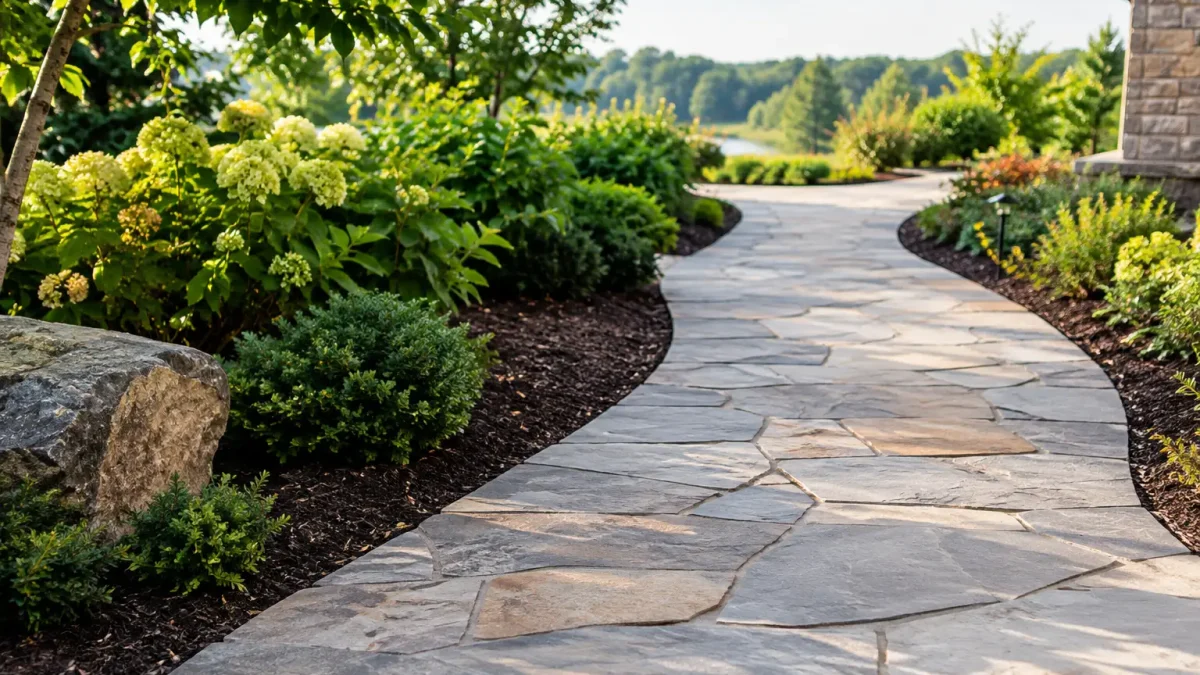
A great stone walkway design does more than connect the driveway, front door, patio, or garden. It gives people a clear, comfortable route through your property while adding texture, character, and lasting curb appeal. When it is properly planned and professionally installed, a stone walkway should feel like it has always belonged there.
For homeowners across the Main Line and surrounding Pennsylvania communities, the best result starts with choices that are both attractive and practical. Stone type, layout, drainage, edging, and base preparation all matter. A beautiful surface is only part of the job. What is underneath determines whether that walkway stays level, drains properly, and holds up through changing seasons.
Start Your Stone Walkway Design With How You Use It
Before choosing a stone color or pattern, consider where the walkway begins, where it ends, and how people will move across it. A front walk has a different purpose than a garden path. An entry walkway should be direct, welcoming, and wide enough for two people to pass comfortably. A path through landscaping can be more relaxed, gently curved, and designed to slow the pace.
Most primary residential walkways work well at 4 to 5 feet wide. A narrower path may suit a side yard or quiet garden route, but a path that is too narrow can feel cramped and make routine use less convenient. If the walkway leads to steps, a porch, or a patio, those transitions should be planned as one connected system rather than separate features.
Curves can soften a formal property and work beautifully around mature trees, planting beds, or grade changes. Straight lines often fit homes with clean architecture and symmetrical front elevations. Neither approach is automatically better. The right choice depends on the home, the available space, and the natural route people already want to take.
Choose Stone for the Home and the Conditions
Natural stone offers a range of looks, from refined and consistent to rugged and irregular. The material should complement the home without competing with it. A traditional stone colonial may suit bluestone or flagstone with clean-cut edges. A more relaxed landscape may call for irregular flagstone pieces that create a natural, handcrafted feel.
Color deserves careful attention. Gray and blue tones are classic and versatile, while warm tan, buff, and brown stones can make an entry feel more welcoming. It is smart to view samples outside, near the siding, brick, stucco, or existing masonry. Sun, shade, and moisture can change how a stone looks throughout the day.
Surface texture also affects safety and maintenance. A naturally cleft or thermal finish generally provides more traction than a highly smooth surface, especially when rain, leaves, or winter weather are part of the picture. For a frequently used front entry, that practical detail matters as much as appearance.
Stone thickness and installation method should match the application. Some products are appropriate for a compacted aggregate base, while others may be installed over a concrete base with mortar. Each approach has advantages. A dry-laid walkway can allow for more natural drainage and easier future adjustments. A mortared installation can create a more formal, tightly finished appearance when the base and drainage are properly handled.
The Base Is What Makes a Walkway Last
The most impressive stone can still fail if the preparation below it is rushed. In Southeastern Pennsylvania, walkways must contend with rain, snow, freeze-thaw cycles, and soil movement. A stable base helps prevent shifting, settling, loose edges, and uneven surfaces that can become trip hazards.
Professional installation begins with proper excavation and grading. The depth depends on the selected stone, the base system, site conditions, and whether the walkway will receive only foot traffic. A compacted aggregate base is then built in layers, creating a firm foundation that supports the stone and helps manage moisture.
Drainage is not an extra feature. It is part of sound walkway construction. The finished surface needs a controlled slope that directs water away from the house and avoids pooling along the path. On properties with more significant grade changes, drainage planning may also include steps, retaining features, or a revised route that works with the landscape instead of fighting it.
Skipping preparation may reduce the initial price, but it often creates a more expensive repair later. A walkway should not rock underfoot, collect water, or begin separating after its first hard winter. Quality craftsmanship is visible at the surface, but it starts below grade.
Details That Give Stone Walkways a Finished Look
The details are where a basic path becomes a complete hardscape feature. Edge restraint is one of the most important. It keeps the stones in place, protects the perimeter, and creates a clean transition to lawn, mulch, or planting beds. Depending on the style, the edge may be natural stone, brick, concrete, or a concealed restraint system.
Joint treatment changes the look and maintenance needs of the walkway. Tight joints can create a tailored, more formal appearance. Wider joints filled with polymeric sand, gravel, or carefully selected groundcover can make the design feel more relaxed. Living joints can be appealing in a garden setting, but they require realistic expectations. Plants need care, and they may not be right for a high-traffic entry path.
Consider how the walkway will meet surrounding features. A path that ends abruptly at a driveway or porch can look unfinished. A properly sized landing, a graceful curve, or a coordinated set of steps can make the route feel intentional. Low landscape lighting can also improve evening safety and highlight the texture of natural stone without overpowering the home.
Plan for Pennsylvania Weather and Everyday Maintenance
Natural stone is durable, but no exterior surface is maintenance-free. Regular sweeping keeps dirt and leaf debris out of joints. Promptly clearing snow and using tools that will not chip stone edges helps protect the surface. For de-icing, choose products carefully and follow the material supplier’s recommendations, especially around natural stone and adjacent masonry.
It is also wise to avoid assuming every stain needs a strong cleaner. Harsh chemicals can discolor stone, damage joints, or affect nearby landscaping. Start with the mildest appropriate cleaning method, and address oil, rust, or organic stains based on the specific stone type.
Over time, a well-built walkway may need minor joint replenishment or occasional resetting of a stone. That is normal exterior care, not necessarily a sign of poor installation. The goal is a system built so maintenance is manageable and the walkway continues to look good year after year.
When a Custom Layout Is Worth It
A simple rectangular walkway can be an excellent choice when the route is straightforward and the home calls for a clean, classic look. Custom planning becomes especially valuable when a property has slopes, drainage concerns, existing mature landscaping, unusual entrances, or a need to connect several outdoor spaces.
It is also worth considering the walkway as part of a larger improvement. Coordinating stone with a patio, front steps, garden wall, or driveway border creates a more unified property appearance. The materials do not have to match exactly. They should feel related in color, scale, and level of finish.
Provato Concrete and Masonry and Grindin LLC approaches each project with the preparation, craftsmanship, and clear communication a lasting exterior improvement deserves. Before work begins, the best plan is one that accounts for the site, the materials, the desired look, and the way you use your property every day.
A stone walkway is a daily-use feature, so make it one you are glad to come home to. When you are ready to improve an entry, garden route, or outdoor living area, schedule an online estimate to discuss a walkway built for your property and your vision.