
Your Concrete Driveway Installation Timeline
October 11, 2026
Concrete Patios That Work Hard and Look Great
October 15, 2026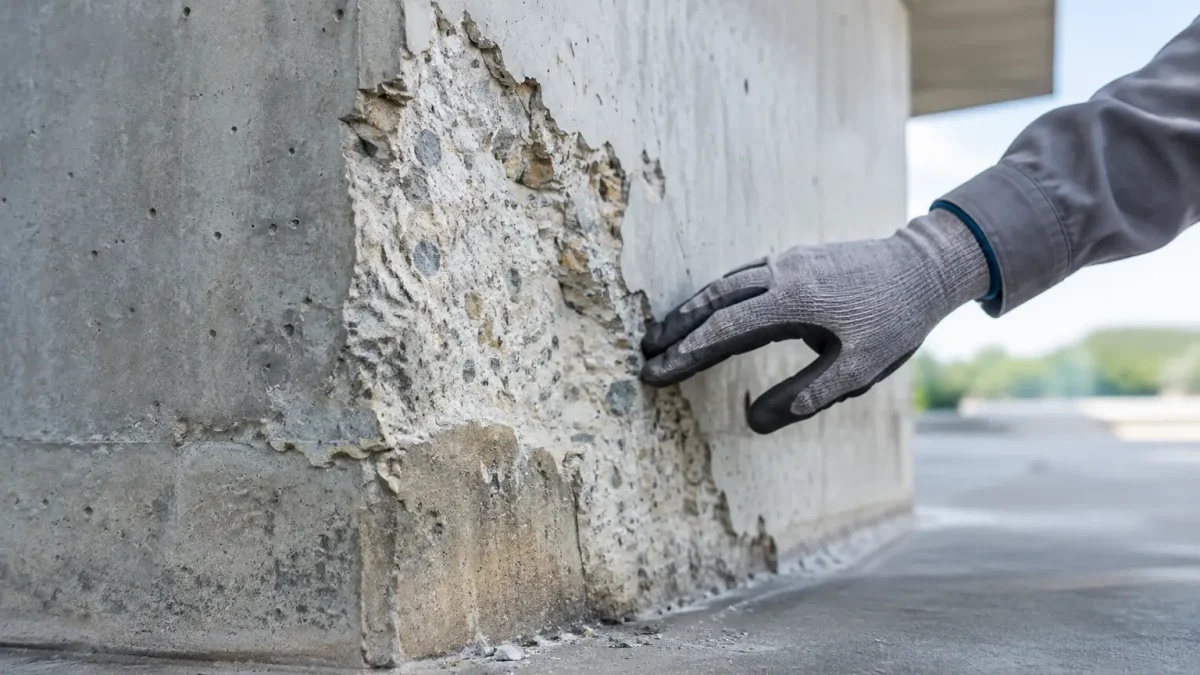
A driveway can look perfectly sound in the fall, then emerge from its first hard winter with thin flakes peeling off the surface. That damage is called scaling, and understanding concrete scaling causes early can help protect your property from a much more expensive repair later. It is not just a cosmetic issue. When the finished surface begins to break down, water can enter more easily and accelerate the damage through each freeze-thaw cycle.
For homeowners and property managers across the Main Line and surrounding Pennsylvania communities, scaling is a common concern because our winters put exterior concrete to work. Snow, ice, road salt, de-icing products, rain, and temperature swings can all expose weaknesses in a slab. The good news is that many cases are preventable, and many damaged surfaces can be evaluated before replacement becomes necessary.
What Concrete Scaling Looks Like
Concrete scaling is the loss of the hardened top layer of a concrete surface. Instead of a smooth, finished appearance, you may see shallow chips, rough patches, small flakes, or areas that look like the surface is peeling away. It often starts in scattered spots, especially where water sits, snow is piled, or vehicles track in salt.
Scaling is different from a structural crack that runs through a slab. A scaled driveway or walkway may still be solid beneath the surface, but the protective, finished face is deteriorating. That distinction matters because the right repair depends on the depth of the damage, the condition of the base, drainage around the slab, and whether the concrete is still structurally sound.
Small areas of surface wear can sometimes be addressed with proper preparation and a compatible repair system. Deep, widespread scaling may point to a slab that needs more extensive work. A professional evaluation prevents a quick surface patch from becoming money spent twice.
The Most Common Concrete Scaling Causes
Freeze-thaw cycles and trapped moisture
Water is concrete’s biggest winter challenge. Concrete is porous, even when it appears dense and smooth. When moisture enters the surface and temperatures drop below freezing, that water expands. Repeated freezing and thawing creates pressure inside the concrete, gradually pushing off weak surface material.
This is especially common on driveways, sidewalks, front steps, and patios that receive frequent moisture. Poor drainage makes it worse. If water consistently ponds along an edge, against a foundation, or in a low section of a walk, that area is likely to show damage first.
Not every winter causes scaling. Well-installed, properly cured concrete with effective drainage can handle normal seasonal exposure far better than a slab with surface weaknesses. But Pennsylvania’s frequent temperature swings can turn a small vulnerability into a visible problem quickly.
De-icing salts and harsh winter products
De-icing products are among the leading concrete scaling causes on residential and commercial properties. Rock salt and other chloride-based products lower the freezing point of water, but they can also increase the number of freeze-thaw cycles a concrete surface experiences. The result can be faster surface deterioration.
Salt does not have to be spread directly on the slab to cause trouble. Vehicles bring it home from treated roads, and foot traffic carries it onto walkways, porches, and entry pads. Over time, those repeated exposures can contribute to flaking and pitting, particularly on newer concrete or surfaces that already have minor wear.
When traction is needed, use products labeled as safer for concrete and follow the manufacturer’s application directions. Sand can add grip without chemically melting ice. No product is completely risk-free, though, so the best approach is to use only what conditions require and clear snow promptly.
Improper finishing during installation
A strong concrete slab begins with correct placement, finishing, and curing. Problems can develop when the surface is finished while bleed water is still present. Bleed water is moisture that rises to the top as fresh concrete settles. Working it back into the surface can create a thin, weak layer that is more likely to peel away later.
Overworking the surface can lead to a similar result. Concrete needs skilled timing. Finishing too early, adding water to make the surface easier to work, or using techniques that create an overly dense top layer can weaken the bond between the surface paste and the concrete below.
This is why workmanship matters beyond appearance. A driveway may look excellent on installation day, but proper curing and finishing practices are what help it stand up to weather, traffic, and years of daily use.
Inadequate curing and cold-weather placement
Fresh concrete needs time and moisture to gain strength. Curing is not an optional final step. It is part of the installation process that allows the concrete to develop a durable surface.
If concrete dries too quickly because of sun, wind, or low humidity, the surface may not achieve the strength it should. Cold conditions bring their own risks. Concrete placed in freezing or near-freezing weather requires planning and protection so it can cure properly. If it freezes before it has developed enough strength, surface damage can appear early and spread over time.
The trade-off is simple: rushing a project may save a few days upfront but can compromise years of performance. A qualified contractor plans placement around conditions and uses appropriate curing methods rather than treating the schedule as more important than the slab.
Weak concrete mix or poor air entrainment
Exterior concrete in a freeze-thaw climate needs a mix designed for the job. One key factor is air entrainment, which creates microscopic air pockets within the concrete. These tiny spaces give freezing water room to expand, reducing internal pressure that can damage the surface.
Without adequate air entrainment, exterior flatwork is more vulnerable to scaling during winter exposure. Water content also matters. Adding too much water to a mix may make it easier to place, but it can reduce strength and leave the finished surface less durable.
For homeowners, this is not a reason to memorize mix specifications. It is a reason to choose a contractor who understands that a patio, sidewalk, or driveway in Southeastern Pennsylvania needs materials and installation methods suited to local conditions.
Poor drainage and standing water
Even quality concrete has limits when water is allowed to sit on it day after day. Improper slope, clogged drains, settled soil, downspouts that discharge onto the slab, and snow piles that melt in the same spot can all keep a surface saturated.
Look for recurring puddles after rain or melting snow. Water should move away from the home and off the concrete surface rather than collecting near joints, corners, or low areas. Addressing drainage may feel separate from repairing the concrete, but it is often the step that determines whether a repair lasts.
How to Limit Scaling Before Winter
Routine care cannot correct a poorly installed slab, but it can reduce the stress placed on healthy concrete. Keep the surface clean so salt residue, leaves, and dirt do not hold moisture against it. Redirect downspouts where practical, clear standing water, and avoid piling snow in the same area all season.
For newer concrete, be particularly cautious with de-icing chemicals during its first winter. Newly placed concrete needs time to mature, and early salt exposure can be tough on the surface. A penetrating sealer, applied when the concrete is clean, dry, and ready for it, can help limit water and salt absorption. Sealers are maintenance products, not permanent shields, so they should be selected and reapplied based on the product and site conditions.
Avoid using metal shovels aggressively on the surface. A plastic shovel or a snow blower with properly adjusted skids is less likely to chip edges or scrape vulnerable areas. If you manage a larger property, winter maintenance crews should know which products are being used and where meltwater is likely to collect.
When to Repair and When to Replace
A few shallow flakes do not automatically mean a new driveway or patio is needed. If the damage is limited, the slab is level, and there are no major cracks or movement concerns, a professional may recommend surface preparation and a suitable repair approach. The key is removing weak material and preparing the surface correctly so the repair has a real chance to bond.
Replacement is often the better long-term choice when scaling is widespread, the concrete is deeply spalled, the slab has settled, or drainage and base issues are contributing to repeated failures. Covering a failing surface without resolving the reason it failed can leave you with the same problem again after another winter.
At Provato Concrete and Masonry and Grindin LLC, we believe clear answers are part of quality workmanship. If your driveway, walkway, patio, or exterior steps are showing flaking concrete, schedule an online estimate to get a straightforward assessment and a plan built for your property’s conditions. Acting before another freeze-thaw season gives you more control over the solution and helps protect the investment you have already made in your home or property.