

12 Entryway Stonework Ideas for Lasting Curb Appeal
November 20, 2026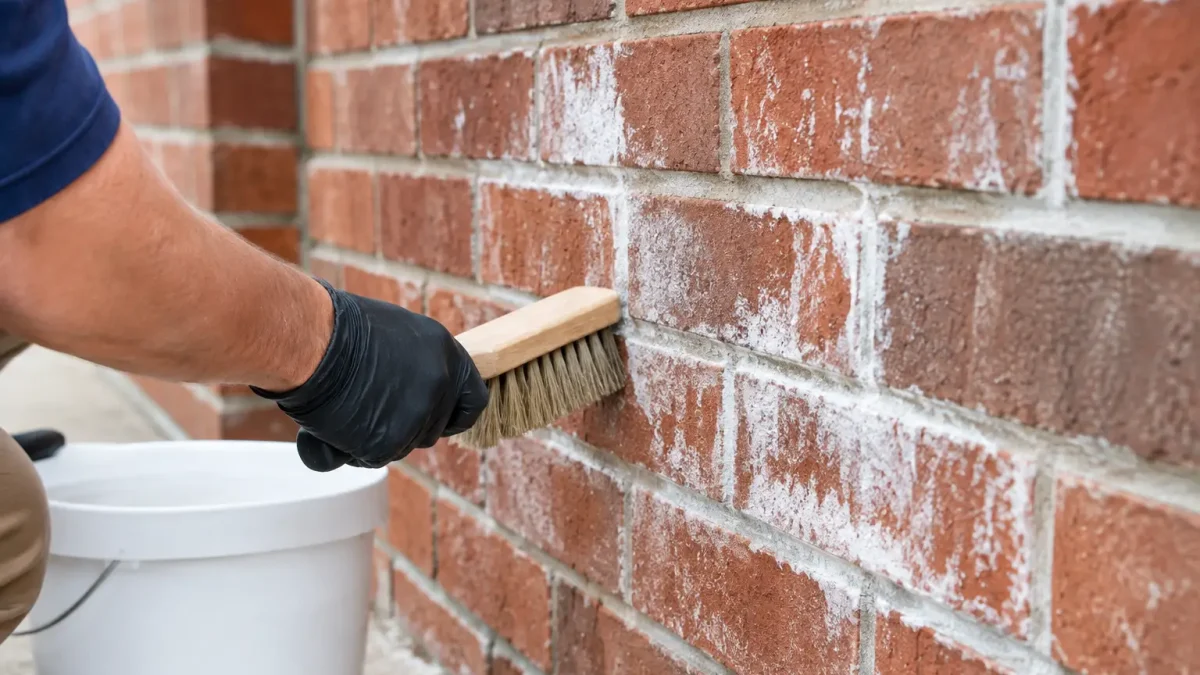
That chalky white film on your brick, stone, block, or concrete is more than a cosmetic nuisance. Learning how to remove efflorescence starts with understanding why it appeared in the first place. The white residue is often easy to clean, but it can return quickly when moisture continues moving through the material.
For homeowners and property managers, the right approach protects the appearance of a driveway, patio, walkway, retaining wall, or masonry facade without damaging the surface. Start gently, use stronger products only when needed, and address the water issue behind the staining.
What Efflorescence Is and Why It Happens
Efflorescence is a powdery deposit of soluble salts left behind when water evaporates from masonry or concrete. Water can enter through rain, damp soil, sprinkler overspray, a missing cap, weak drainage, cracks, or moisture within a newer installation. As that water travels through the pores of the material, it carries natural salts to the surface. Once the water dries, the salts remain.
Fresh concrete and newly built masonry can develop efflorescence during the curing and drying process. In that situation, a light amount may fade after a few weather cycles. Older surfaces that suddenly develop recurring white deposits deserve a closer look. Repeated efflorescence can point to drainage problems, water intrusion, failed joints, or moisture collecting behind a wall.
Efflorescence is commonly white, but not every white stain is efflorescence. Paint residue, hard-water scale, mortar smears, mildew treatments, and mineral staining can look similar. If the deposit does not brush away as a dry powder, or if the masonry is flaking, cracking, or staying damp, it is wise to have the surface evaluated before applying cleaners.
How to Remove Efflorescence Safely
The goal is to remove the salt without forcing more water into the masonry or etching the concrete. Always test a cleaning method in a small, inconspicuous area first. This matters especially on older brick, natural stone, colored concrete, and surfaces with sealers or decorative finishes.
Start with a dry brush
Wait until the surface is completely dry. Use a stiff, nonmetallic bristle brush to loosen the powder, then sweep or vacuum it away. A natural or synthetic fiber masonry brush is a better choice than a wire brush, which can scratch softer brick, stone, and concrete or leave metal marks behind.
For a light deposit, dry brushing may be all that is needed. This is the lowest-risk method, and it avoids adding water that may carry additional salts to the surface.
Use clean water carefully
If dry brushing leaves a thin haze, rinse the area with clean water and scrub gently with the brush. Work in manageable sections and avoid soaking the wall or slab. On a horizontal concrete surface, rinse thoroughly and remove standing water so minerals are not left behind as it dries.
Water can work well for mild efflorescence, but it is not always the best answer. If poor drainage is causing the problem, heavy washing may temporarily worsen it. Do not use a high-pressure washer on aging brick, weak mortar joints, loose stone, or damaged concrete. Excessive pressure can open the surface further and create a larger repair issue.
Choose a masonry cleaner for stubborn deposits
For heavier staining, use a cleaner specifically labeled for efflorescence and approved for the material being cleaned. Follow the manufacturer’s dilution, dwell-time, safety, and rinsing instructions exactly. Wear gloves and eye protection, protect nearby plants, and keep cleaners off metal, glass, painted surfaces, and finished landscaping materials.
Acid-based cleaning products can remove mineral deposits, but they are not a universal solution. The wrong product or concentration can discolor concrete, weaken mortar, etch natural stone, or leave a patchy finish. Never use muriatic acid as a casual first step, and do not mix cleaning chemicals. On historic brick, limestone, sandstone, or delicate masonry, professional cleaning is usually the safer investment.
Find the Moisture Source Before the Stain Returns
Cleaning the surface makes it look better. Controlling moisture is what helps keep it that way. Walk around the area after a rain and look for where water is collecting, splashing, or running toward the masonry.
Check that gutters and downspouts move water away from foundations, walls, patios, and walkways. Look for soil or mulch piled too high against brickwork, which can hold moisture at the wall. On patios and driveways, verify that the surface drains away from the home and does not leave puddles along edges, steps, or joints.
Masonry walls may need attention at cracked mortar joints, loose caps, failing flashing, or open penetrations around fixtures. Concrete surfaces may have cracks or joint failures that allow water below the slab. The right repair depends on the structure and the cause. Sealing over an active moisture problem can trap water and lead to more visible staining, scaling, or deterioration.
Should You Seal Brick or Concrete After Cleaning?
A quality penetrating sealer can reduce water absorption on suitable concrete, brick, and masonry surfaces. It can be useful for exposed patios, walkways, driveways, and certain walls, especially after necessary repairs and proper drying time. But sealer is not a substitute for drainage, sound construction, or masonry repair.
The material must be dry before sealing, and the product must match the surface. Dense concrete, porous brick, natural stone, and manufactured stone each have different needs. A breathable penetrating sealer is often preferred for masonry because it helps repel liquid water while allowing water vapor to escape. Film-forming products can change the appearance and may peel or trap moisture if applied in the wrong location.
For newer concrete, timing matters. Concrete needs adequate curing time before many sealers can be applied. For older surfaces, remove efflorescence first and allow the area to dry fully. Applying sealer over active salts can lock in a cloudy, uneven appearance.
When Efflorescence Calls for a Professional
A small, one-time deposit on a new patio or brick wall is usually manageable. Call a masonry or concrete professional when the staining returns repeatedly, covers a large area, appears with cracking or crumbling, or develops on interior walls. White deposits indoors can signal unwanted water movement that should not be ignored.
Professional help is also worthwhile when cleaning involves historic masonry, natural stone, decorative concrete, or an elevated wall where water may be entering from behind. A trained contractor can identify whether the issue is simple surface efflorescence or a sign of drainage, flashing, mortar, joint, or structural maintenance needs.
For properties across Philadelphia’s Main Line and surrounding Pennsylvania communities, Provato Concrete and Masonry and Grindin LLC can assess concrete and masonry surfaces, recommend practical repairs, and help protect the finished look of your exterior investment. Schedule an estimate online when the white staining keeps coming back or the surface needs more than a careful cleaning.