

Building Removal Permit Guide for Property Owners
November 6, 2026
Which Concrete Finish Prevents Slipping Best?
November 10, 2026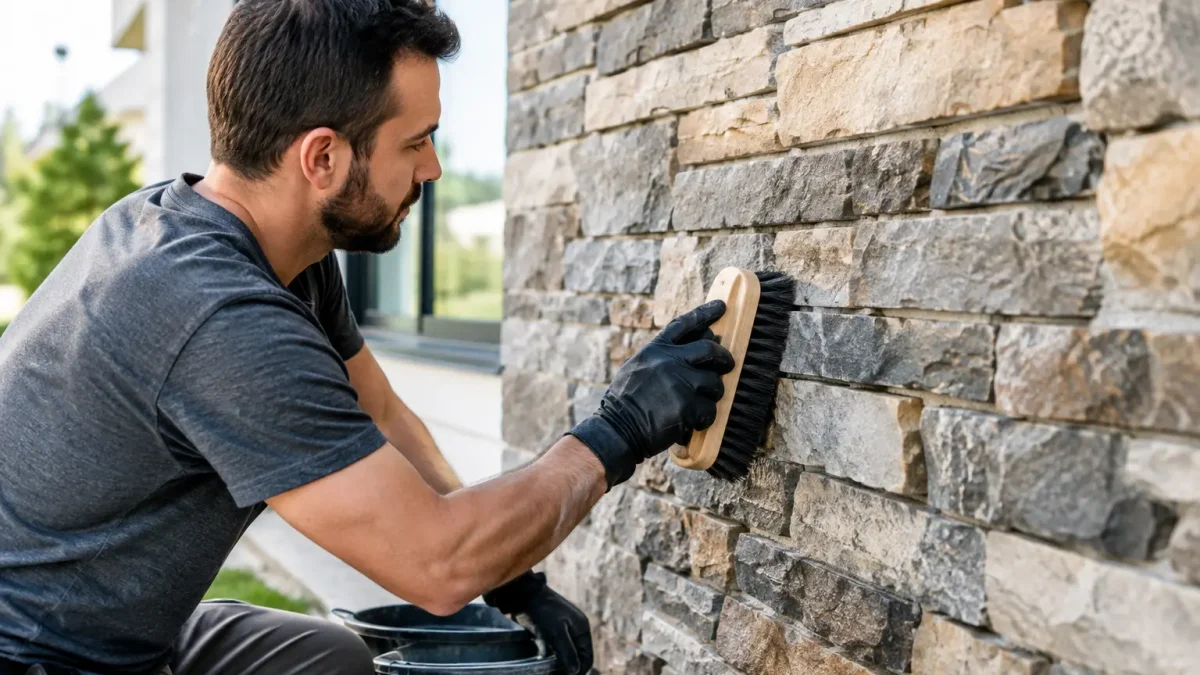
Stone veneer earns its place on a home because it looks substantial, timeless, and built for the long haul. But even quality stonework needs attention, especially through Southeastern Pennsylvania’s wet springs, humid summers, and freeze-thaw winters. Knowing how to maintain stone veneer helps you protect the finish, catch small issues early, and avoid moisture damage that can turn a minor repair into a larger masonry project.
The good news is that stone veneer maintenance is usually straightforward. It is less about constant cleaning and more about managing water, using the right products, and having loose or damaged materials repaired before weather gets behind them.
How to Maintain Stone Veneer Without Damaging It
Start with a gentle approach. Natural stone and manufactured stone veneer can vary widely in density, finish, and absorption, so aggressive cleaning methods are rarely the right first move. A soft-bristle brush, clean water, and a mild, stone-safe cleaner will handle most dirt, pollen, and surface grime.
Rinse the wall first, working from the bottom upward to reduce streaking. Then apply cleaner according to its directions, lightly brush problem areas, and rinse thoroughly. Keep the pressure low if you use a hose attachment. High-pressure washing can force water behind veneer, wear down mortar joints, and damage softer stone faces. It may make a wall look cleaner for a day while creating a moisture problem that appears months later.
Avoid acidic cleaners unless a masonry professional confirms that the stone and mortar can tolerate them. Vinegar, muriatic acid, and many harsh store-bought cleaners may etch natural stone, discolor manufactured veneer, or weaken the mortar. Wire brushes and abrasive pads can leave permanent marks, particularly on softer limestone, sandstone, or textured manufactured stone.
For most exterior walls, a light cleaning once a year is enough. Areas below rooflines, around landscaping, and near patios may need a little more attention because they collect organic debris and splashback.
Keep Water Moving Away From the Veneer
Water is the main maintenance concern for stone veneer. The veneer itself is designed to handle weather, but water that repeatedly enters cracks, sits at the base of a wall, or gets behind the installation can cause staining, loose pieces, and mortar deterioration.
Look closely at gutters, downspouts, roof flashing, window trim, and exterior caulking. A leaking gutter that spills down a stone chimney or accent wall can leave dark streaks, encourage algae growth, and saturate the wall over time. Downspouts should discharge away from the foundation and should not constantly soak the bottom courses of veneer.
Grade matters, too. Soil, mulch, and planting beds should not be piled against the stone. Maintain visible clearance at the base of the wall, and slope landscaping so rainwater moves away from the home. Mulch that stays wet against veneer can contribute to discoloration and hold moisture where it does not belong.
Pay attention after heavy rain. If a particular section remains dark long after surrounding stone has dried, water may be collecting behind or around that area. That does not always mean there is a serious installation issue, but it is worth having a qualified masonry contractor inspect it before winter.
Inspect Mortar Joints Each Spring and Fall
Stone veneer relies on its mortar joints to keep the assembly secure and finished. Seasonal inspections are one of the most practical ways to extend its service life. Walk around the property in daylight and look for changes rather than expecting every joint to look identical.
Watch for cracked, missing, crumbling, or recessed mortar. Hairline cracks can occur with normal seasonal movement, but cracks that widen, run through multiple stones, or return after repair deserve closer attention. Loose stones should never be ignored. They allow water behind the veneer and can create a safety concern around entrances, steps, and gathering areas.
A few visual signs should prompt a professional evaluation:
- Stone pieces that rock, shift, or sound hollow when gently tapped
- White, powdery deposits on the surface, known as efflorescence
- Rust-colored stains, persistent dark patches, or peeling nearby paint
- Cracks around windows, doors, corners, or where stone meets another material
Efflorescence is often a sign that moisture is moving through the masonry and leaving mineral salts behind. It can sometimes be cleaned after the wall dries, but the underlying water source should be addressed first. Cleaning the white residue without correcting drainage or flashing simply treats the symptom.
Treat Stains Based on Their Source
Not every stain needs the same solution. Dirt and pollen usually respond to gentle washing. Organic growth such as algae or mildew may require a stone-safe cleaner and better airflow or drainage around the affected area. Rust staining can come from metal fixtures, fasteners, furniture, or water runoff and may need a specialty treatment selected for the type of stone.
Oil, grease, and grill splatter are common on veneer near outdoor kitchens and patios. Address them promptly with an absorbent poultice or cleaner made for masonry, rather than scrubbing harder. The longer oil remains on porous stone, the deeper it can travel into the face.
Before using any new product, test it on a small inconspicuous area. This matters even when a cleaner is labeled for stone. A product that works well on dense granite may not be appropriate for a more absorbent veneer or colored mortar. When in doubt, stop before experimenting with chemicals. Replacing stained or etched stone is more costly than bringing in an experienced professional for guidance.
Be Careful With Sealers
Sealing is not automatically required for every stone veneer installation. Some natural stone benefits from a breathable, penetrating sealer, especially in high-splash areas or around outdoor living spaces. Other materials perform well without sealer, and applying the wrong product can trap moisture or create an unnatural glossy finish.
If you choose to seal, use a vapor-permeable product intended for your specific type of stone. The goal is to help the surface resist water and stains while still allowing moisture vapor to escape. Film-forming sealers are generally a poor choice for exterior masonry because they can peel, discolor, or trap moisture beneath the surface.
The timing depends on exposure, stone type, and product instructions. Instead of sealing on a fixed annual schedule, check whether water still beads on the surface and assess the condition of the veneer. A professional can recommend whether sealing is worthwhile and identify any moisture issue that must be corrected first.
Protect Stone Veneer During Seasonal Property Care
Routine yard work can accidentally damage masonry. Keep string trimmers, metal-edged shovels, and snow-removal equipment away from the bottom of stone walls. Repeated contact can chip veneer edges and knock mortar loose. During winter, do not use de-icing salts directly against stone veneer or nearby masonry steps unless the product is approved for masonry surfaces.
Be selective with climbing plants. Vines can look attractive on a masonry wall, but they hold moisture, hide cracks, and make inspections harder. If vegetation is already growing against the veneer, trim it back so the wall can dry and remain visible.
For interior stone veneer around fireplaces, dust regularly and avoid soaking the surface. If soot develops, use a cleaner formulated for masonry and have the fireplace inspected if staining is excessive or keeps returning. Heat, smoke, and moisture require a different maintenance approach than a typical exterior accent wall.
Repair Small Problems Before Freeze-Thaw Weather Arrives
A damaged mortar joint or loose stone is easier to repair in mild weather than after a Pennsylvania winter has pushed water in and expanded it through repeated freezing. Professional repairs may include repointing failed mortar, resetting individual stones, correcting flashing, improving drainage, or replacing damaged veneer to match the existing work.
The key is matching the repair method and materials to the wall. Mortar that is too hard, the wrong color, or applied incorrectly can stand out and may affect how the veneer performs. A skilled masonry team will assess the cause of the failure instead of simply filling a visible crack.
At Provato Concrete and Masonry and Grindin LLC, we believe good masonry should look right and perform right. If your stone veneer has loose pieces, recurring stains, failing mortar, or signs of water intrusion, schedule an online estimate before the next season puts more stress on the wall.