
Mortar Curing Time: When Is Masonry Ready?
October 9, 2026
Concrete Scaling Causes and How to Stop Them
October 13, 2026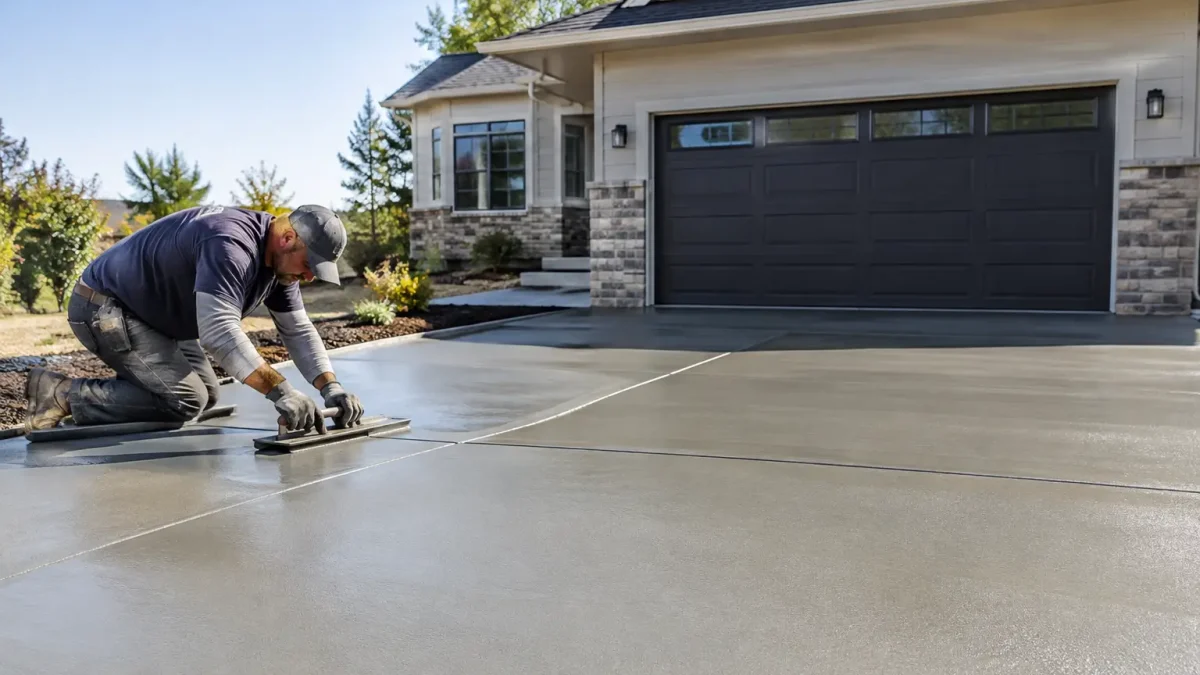
A new driveway is not a one-day decision, even when the concrete itself is placed in a matter of hours. A realistic concrete driveway installation timeline accounts for planning, site preparation, curing, weather, and the time needed before vehicles return to the surface. Knowing what happens at each stage helps you schedule confidently and protect the investment from day one.
For most residential projects, the on-site work may take several days, while the full process from estimate to regular vehicle use can take a few weeks. Every property is different, and a dependable contractor will explain the schedule before work begins, communicate changes promptly, and never rush critical preparation or curing steps.
What Affects a Concrete Driveway Installation Timeline?
The driveway’s size and layout matter, but they are not the only factors. A straightforward replacement on a level, accessible property typically moves faster than a new driveway requiring grading, drainage corrections, retaining work, or coordination with other exterior improvements.
Weather is a major consideration in Southeastern Pennsylvania. Concrete should not be placed in freezing conditions or during heavy rain, and extreme heat can also require adjustments to protect the finish and curing process. A responsible crew watches the forecast closely because pouring under poor conditions can compromise long-term performance.
Permits and local requirements may add time before work starts. Requirements vary by municipality, particularly when a driveway meets a public sidewalk, street apron, or drainage area. If approvals are needed, it is better to build that time into the plan than to face a preventable delay later.
Access is another practical factor. Limited room for trucks, equipment, or material staging may require a different approach than an open suburban lot. Existing drainage, underground utilities, tree roots, and unexpected base conditions can also affect the working schedule. These are not excuses for poor planning. They are site realities that should be assessed early and addressed clearly.
The Typical Concrete Driveway Installation Timeline
Planning, site visit, and scheduling
The process begins with an on-site evaluation. Your contractor measures the area, reviews the existing driveway, checks slopes and drainage, discusses finish options, and identifies any details that may affect the scope. This is the right time to talk about parking access, gates, landscaping, sidewalk connections, and where water should move after a storm.
Once the scope is clear, the project can be scheduled around material availability, weather, permit needs, and crew availability. For homeowners, this stage is also the time to plan alternate parking. A clear schedule should include not only the installation date but also the expected period when the driveway cannot be used.
Removal and base preparation
For a replacement driveway, the old concrete is broken up and removed from the work area. Then the crew evaluates and prepares the subgrade, which is the soil beneath the driveway. Soft areas may need correction before the base is installed. Skipping this step is one of the fastest ways to create trouble down the road.
A properly prepared aggregate base is compacted to provide support and help manage movement. The driveway is graded so water drains away from the home and does not collect where it can contribute to surface damage or icy conditions. Forms are set to establish the driveway’s final edges, thickness, and slope.
Depending on the project, this stage can take one to several workdays. A simple driveway may be ready quickly. A larger area, difficult access, significant grading, or drainage corrections may extend the preparation period. Quality work takes the time it takes, especially below the surface where the finished driveway cannot hide mistakes.
Reinforcement, concrete placement, and finishing
Once the base and forms are ready, reinforcement is installed where specified for the project. The crew then places the concrete, levels it, and finishes the surface. This is usually the most visible day of the job, but it is only one part of a durable installation.
Most residential driveways receive a broom finish for reliable traction. Control joints are added at planned locations to help guide natural concrete shrinkage. Concrete can crack as it cures, and joints are designed to encourage cracks to occur in less noticeable, controlled lines instead of randomly across the slab.
Placement and finishing are often completed in one day, assuming favorable conditions and a project size that fits the planned pour. The crew will protect the fresh surface and provide instructions for keeping people, pets, and vehicles off it.
Curing and return to service
Concrete gains strength over time. It does not reach its intended strength the moment it looks dry. The surface may be safe for careful foot traffic after a short period, often within 24 to 48 hours depending on weather and the contractor’s instructions. That does not mean it is ready for a car.
For regular passenger vehicles, many contractors recommend waiting at least seven days before driving on a new driveway. Concrete continues to gain strength for about 28 days, so heavier vehicles, dumpsters, moving trucks, and construction equipment should stay off the surface until your contractor confirms it is appropriate. The right waiting period depends on the mix, temperature, thickness, and conditions during curing.
Do not test the surface early because it feels hard. Tire marks, edge damage, and premature stress can leave permanent evidence of a rushed decision. A few extra days of patience help protect a driveway built to serve your property for years.
How Long Should You Plan to Be Without Driveway Access?
For many replacement projects, homeowners should plan for active on-site work lasting roughly two to five days, followed by at least a week without vehicle access. From the first consultation to completed curing, the broader calendar can be two to four weeks or longer when permits, weather, complex site conditions, or a busy construction season are involved.
That range is not meant to be vague. It reflects the difference between a smooth, standard project and one that requires additional care. The best schedule is not the one that sounds fastest. It is the one that gives the crew enough time to prepare the base correctly, place concrete in suitable conditions, and allow the surface to cure as intended.
If you are coordinating landscaping, painting, moving, roofing, or other work around your driveway project, discuss it before the start date. Fresh concrete needs protected access. Keeping trucks, ladders, material deliveries, and heavy equipment off the new surface prevents avoidable damage and scheduling conflicts.
Questions to Ask Before Your Driveway Project Starts
A professional contractor should be able to explain the expected work sequence in plain language. Ask when the crew will arrive, how long your property will be inaccessible, where vehicles and materials will be staged, and what weather conditions could change the schedule. You should also understand the curing instructions, drainage plan, joint layout, and when it is safe to park on the driveway.
It is worth asking how changes will be communicated if the forecast turns or site conditions require additional work. Clear communication is part of quality craftsmanship. You deserve to know what is happening at your property, why it matters, and what comes next.
At Provato Concrete and Masonry and Grindin LLC, we approach every driveway with the preparation, workmanship, and respect your property deserves. If you are planning a new driveway or replacing a worn surface, schedule an online estimate and get a clear project plan built around your property, your timeline, and a finished result you can be proud of.