

Top Benefits of Concrete Sidewalks for PA Properties
October 9, 2026
Can Concrete Withstand Freeze Thaw in Pennsylvania?
October 9, 2026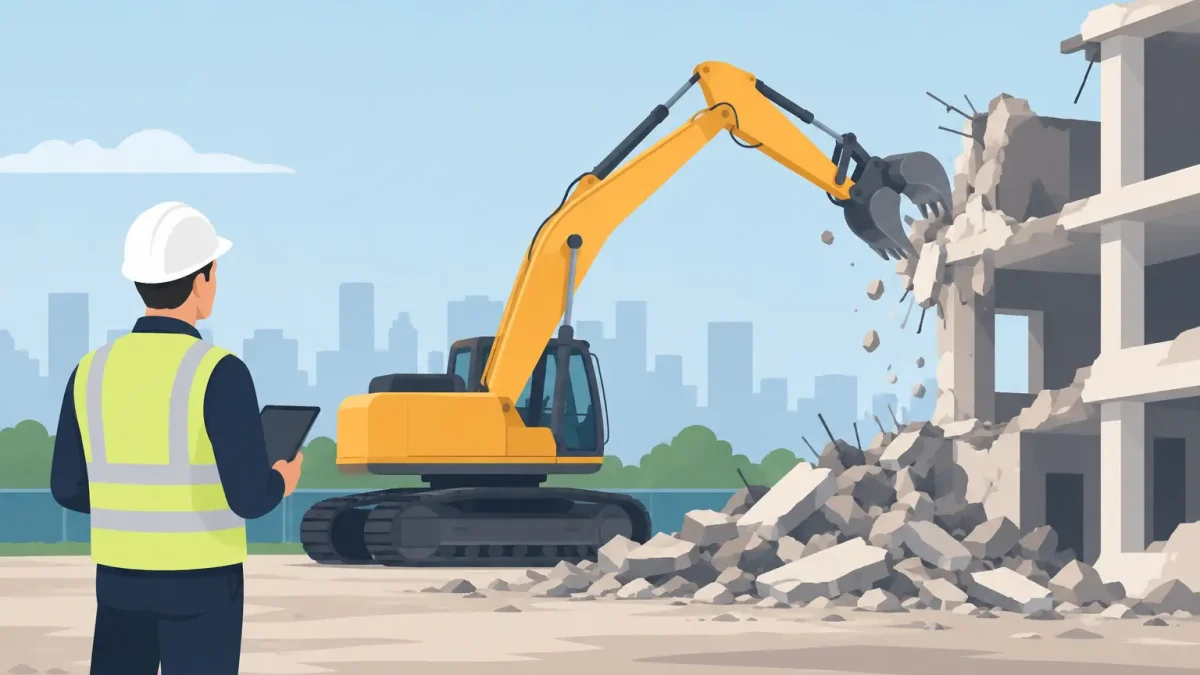
A failing patio, cracked driveway, unstable retaining wall, or deteriorated commercial pad does not improve with another patch. When the existing surface or structure has reached the end of its service life, a guide to site demolition helps property owners make a clear decision: remove the problem correctly, prepare the ground properly, and build the replacement on a dependable foundation.
Demolition is more than breaking concrete and hauling debris away. It affects drainage, utility safety, neighboring property, permit requirements, site access, and the quality of whatever comes next. For Main Line homeowners, property managers, and commercial owners, the best outcome starts with a contractor who defines the scope before equipment arrives.
Start With the Real Reason for Demolition
The visible damage is not always the full issue. A concrete sidewalk may be heaved by tree roots, but poor base preparation or drainage may be the reason it continues to move. A driveway may be cracked beyond practical repair because the subbase has failed. A masonry wall may be leaning because water pressure behind it has nowhere to go.
Before demolition begins, identify whether the work is cosmetic, structural, or part of a larger exterior improvement. That determines how far removal needs to go. Removing only a damaged concrete section can make sense when the surrounding slab is stable, properly supported, and likely to perform well. Full removal is usually the better investment when failure is widespread, grades need correction, or the new installation requires a consistent base.
For commercial properties, scope also includes operations. Loading areas, pedestrian routes, parking access, deliveries, and tenant safety may require phased demolition rather than closing an entire area at once. The least disruptive approach is not always the fastest one, but it may be the right one for an occupied property.
Guide to Site Demolition: Define the Scope First
A dependable demolition estimate should identify what is being removed, where materials will go, and what condition the site will be left in. Vague wording creates avoidable disputes later. Property owners should understand the limits of removal before approving the work.
A complete scope commonly addresses the existing concrete, asphalt, masonry, footings, landscape features, and any unsuitable base material beneath the surface. It should also clarify whether excavation, grading, compaction, drainage work, or replacement construction is included. Demolition and installation are closely connected, yet they are not the same task.
For example, removing an old patio is straightforward only until the crew finds buried stone, excessive fill, abandoned concrete footings, or saturated soil. Those conditions can change the labor and disposal required. A professional contractor cannot always predict what is underground, but should explain how concealed conditions are handled and obtain approval before making changes that affect price or scope.
At Provato Concrete, Demolition & Masonry, no upcharge is made without approval. That standard matters most when a project exposes conditions that were not visible during the initial walkthrough.
Check Permits, Utilities, and Property Limits
Demolition work often has local requirements, especially when it affects public sidewalks, curb areas, drainage, structural walls, or a commercial site. Municipal rules vary across Pennsylvania communities. Some projects need permits before removal begins, while others require inspections as part of the replacement work.
Utility coordination is not optional. Underground electric, gas, water, sewer, cable, irrigation, and drainage lines may run through an exterior work area. The demolition plan should allow time for utility marking and should account for known private lines that may not be included in a standard public utility locate.
Property boundaries deserve the same attention. Walls, fences, driveways, and walkways near a lot line can create questions about ownership and access. If equipment or debris removal will require entry through a neighboring property, get written permission in advance. Clear communication protects the schedule and the relationship with neighbors.
Older structures also require added caution. Materials may need testing before disturbance if there is a reasonable concern about asbestos-containing material, lead-based coatings, or other regulated substances. The proper approach depends on the material, the age and type of structure, and applicable requirements. This is not an area for assumptions or shortcuts.
Plan for Access, Protection, and Cleanup
The right equipment depends on the site. A large open commercial lot can accommodate heavier machinery and roll-off containers. A narrow residential driveway on the Main Line may require smaller equipment, controlled loading, and careful protection of nearby landscaping, curbs, and structures.
Good site preparation protects what is staying. That can include isolating work areas, protecting trees and finished surfaces, establishing a safe route for trucks, and controlling dust. Demolition is loud and disruptive by nature, but it should still be organized. The crew should know where debris is staged, how the work zone is secured, and how the property will remain accessible when possible.
Cleanup should be defined as part of the work, not treated as an afterthought. Concrete, brick, block, asphalt, soil, metal, and general debris must be separated or disposed of appropriately. A site that looks clean at the end of the day is a good sign, but the more important question is whether it is ready for the next phase of construction.
Protect the Replacement Work Before It Begins
The quality of a new driveway, patio, sidewalk, retaining wall, or stone installation depends heavily on what happens after removal. Demolition exposes the conditions that the replacement must address.
Once old materials are out, the contractor should evaluate soil stability, base depth, water movement, and final grades. Soft or disturbed soil may need to be removed and replaced. A new compacted aggregate base may be required. If water is directed toward the home, garage, or building foundation, the grade must be corrected before a new hard surface locks the problem in place.
This is where choosing the lowest removal price can become expensive. A contractor who only breaks and hauls away material may leave you with a site that is not ready for durable installation. A contractor who understands concrete, masonry, drainage, and hardscape construction can connect demolition decisions to the finished result.
There are trade-offs. Reusing existing base material can reduce cost when it is clean, stable, and properly compacted. Replacing it is the better choice when it contains excessive fines, organic material, poor drainage, or evidence of movement. Likewise, preserving mature landscaping may be worthwhile, but only if access restrictions do not compromise safety or the quality of the new work.
Set a Realistic Schedule and Budget
Most property owners want to know how long demolition will take. The answer depends on site size, material thickness, access, disposal distance, weather, utility coordination, and whether replacement work follows immediately. A small sidewalk removal may be completed quickly. A large driveway or commercial demolition project can require phased work and more coordination.
Budget should include more than equipment and labor. Disposal fees, permit costs, protection measures, excavation, base repair, drainage corrections, and restoration all affect the final number. The most useful estimate breaks down the expected work clearly enough that you can compare scope, not just bottom-line price.
Ask how the contractor handles unforeseen conditions, whether the crew will be dedicated to your project, and what needs to happen before the replacement phase can begin. Clear answers reduce schedule surprises. They also help property owners plan around parking, tenant notices, deliveries, and access needs.
Questions Worth Asking Before You Approve the Work
Before scheduling site demolition, make sure you can answer these practical questions:
- What materials and areas are included in removal?
- Are permits, utility coordination, and required inspections part of the plan?
- How will nearby structures, landscaping, and finished surfaces be protected?
- Where will debris be taken, and is cleanup included?
- What happens if unsuitable soil, hidden footings, or buried materials are discovered?
- Is the site being prepared for the next construction phase, including base, drainage, and grading needs?
A contractor who can answer these questions directly is more likely to manage the work with the discipline the project deserves.
The best demolition project leaves no uncertainty about what comes next. Whether you are replacing a worn driveway, rebuilding a patio, correcting unsafe sidewalks, or preparing a commercial site for improvement, treat removal as the first piece of quality construction, not a separate cleanup job.