

How to Budget Hardscape Upgrades Without Surprises
October 17, 2026
Stone Veneer Benefits for Lasting Curb Appeal
October 21, 2026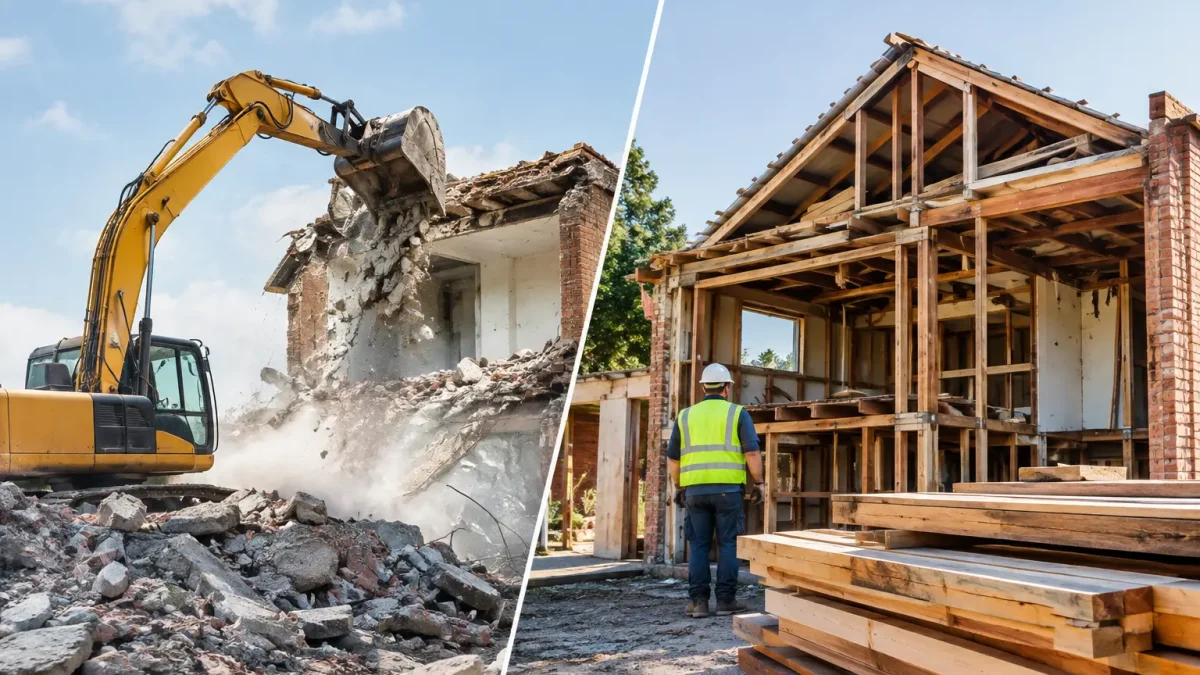
A removal project can look straightforward from the street: bring in equipment, clear the structure, and prepare for what comes next. But demolition vs deconstruction costs can differ substantially once labor, disposal, salvage, site access, and scheduling are considered. The lower bid is not always the lower overall project cost.
For homeowners, property managers, builders, and commercial owners, the right choice depends on the condition of the structure, the materials involved, the project schedule, and the value of what can be saved. A clear scope and a professional site review are the best way to avoid surprises before work begins.
Demolition vs Deconstruction Costs: The Core Difference
Demolition is typically the faster removal method. Equipment is used to take down a structure, wall, slab, or other feature, then the resulting material is loaded out, separated where required, and taken to an approved disposal or recycling facility. It is often the practical choice when materials are damaged, the site needs to be cleared quickly, or the work involves large amounts of concrete, block, or mixed debris.
Deconstruction is a more selective process. Instead of removing everything at once, crews carefully take apart reusable components such as lumber, brick, doors, fixtures, flooring, stone, cabinetry, architectural trim, or metal. Materials may be reused on the property, donated, sold, or sent to specialized recycling channels.
That difference in method drives the price. Conventional removal generally has lower labor costs and a shorter schedule. Deconstruction generally requires more hands-on work, more sorting, more careful handling, and more coordination for material storage or pickup. In exchange, it can reduce waste and preserve materials that have real value.
What Makes Up the Total Project Price
A quote should account for more than the act of tearing something down. Every property has practical conditions that affect cost, and accurate pricing starts with seeing those conditions in person.
Labor, Equipment, and Time
Labor is often the biggest cost difference between the two approaches. A skilled equipment operator can remove a structure or concrete feature efficiently, while deconstruction requires workers to remove components in sequence without damaging the materials intended for recovery.
Equipment needs also matter. A tight residential lot may require smaller machinery, more manual loading, or additional protection for nearby landscaping, utilities, sidewalks, and buildings. A large, open commercial site may allow equipment to work more efficiently, but may bring added requirements for traffic control, safety planning, or coordination with other trades.
Time has value beyond the invoice. If a builder is waiting to start excavation, foundation work, or a new installation, a faster removal method may keep the overall construction schedule moving. Conversely, if there is no immediate deadline and valuable material can be recovered, the longer pace of deconstruction may be worth considering.
Hauling, Disposal, and Recycling
Material has to go somewhere. Hauling, container rentals, landfill or transfer-station fees, recycling charges, and load weights all affect the final number. Mixed construction debris is usually more expensive to process than clean, separated material.
Concrete and masonry are good examples. Clean concrete may be crushed and recycled in some situations, while material mixed with soil, wood, insulation, or other debris can be more complicated and costly to handle. Brick and natural stone may be reusable, but only if they can be removed without excessive breakage and cleaned or stored responsibly.
A proposal should clearly explain whether hauling and disposal are included, how material quantities are estimated, and what happens if concealed conditions create additional debris. Clear communication here protects the property owner from unclear allowances and unexpected fees.
Salvage Value Is Not the Same as Savings
It is easy to assume that every salvaged item will offset the cost of deconstruction. Sometimes it does. Old-growth lumber, quality architectural doors, usable brick, historic millwork, copper, fixtures, and natural stone can have value. Yet the value must be realistic.
Someone still has to remove, sort, denail, stack, transport, market, or donate those materials. Reclaimed brick may require substantial cleaning. A cabinet or window that is carefully removed still needs a buyer, a reuse plan, or a donation recipient willing to accept it. Storage can also become a cost if materials sit on-site and delay the next phase of work.
The strongest financial case for deconstruction is often when the owner already has a use for the recovered material. Reusing stone for a new landscape feature, saving brick for a repair, or incorporating beams into a renovation can create value that does not depend on resale.
Permits, Utilities, and Safety Requirements
Permits and required inspections vary by municipality and scope. Utility disconnections, site protection, dust control, traffic considerations, and environmental testing may be needed before removal begins. Older properties can require added planning when potentially hazardous materials are suspected.
These requirements are not optional line items to skip in search of a cheaper price. They are part of completing the job safely, legally, and responsibly. A professional contractor will identify the likely requirements early and explain which items are included in the scope and which conditions may need separate testing or approval.
When Demolition Usually Makes Better Financial Sense
Standard removal is often the cost-effective choice when the material has little reuse potential. A severely deteriorated garage, failing concrete, water-damaged framing, or a structure with extensive mixed materials may take too much labor to take apart selectively.
It can also make sense when schedule is the priority. For a homeowner replacing a failed driveway or patio, a commercial property preparing for a tenant improvement, or a builder ready to begin new construction, efficient removal and clean site preparation can be more valuable than recovering small amounts of material.
The goal is not simply to remove material quickly. It is to remove it with the right equipment, protect the surrounding property, manage the debris correctly, and leave the site ready for the next step.
When Deconstruction Can Be Worth the Added Cost
Deconstruction is worth a serious look when a property contains high-quality, reusable materials or when the project has specific sustainability, preservation, or reuse goals. It is especially relevant for older homes with distinctive craftsmanship, properties with recoverable stone or brick, and renovations where existing components will be incorporated into the finished design.
It may also be a strong fit for owners who want to reduce landfill waste and have enough schedule flexibility to support careful removal. The decision should be based on an honest comparison of added labor against likely reuse value, not on an assumption that every reclaimed item will produce a profit.
A hybrid approach is often the practical middle ground. Valuable materials can be selectively removed first, followed by efficient removal of the remaining structure or hardscape. This approach can preserve what matters without turning the whole project into a lengthy salvage operation.
Questions to Ask Before You Approve a Quote
Before choosing a contractor, ask how the scope handles site protection, utilities, hauling, disposal, recycling, and final cleanup. Confirm whether the price is based on visible conditions only and how concealed materials, extra thickness, buried concrete, or access issues will be addressed.
For deconstruction, ask which materials are realistically recoverable, who is responsible for moving them, where they will be stored, and whether removal is expected to affect the project schedule. For standard removal, ask how nearby structures and finished surfaces will be protected and whether the site will be prepared for the next contractor or construction phase.
A detailed answer is more valuable than a vague low number. It shows that the contractor has considered the real work required to complete the project properly.
Choose the Method That Supports the Whole Project
The best choice is rarely about one line item. It is about what happens after the site is cleared. If your priority is speed, clean preparation, and keeping new construction on track, conventional removal may provide the better value. If the property contains materials worth preserving and you have a clear plan for them, deconstruction can be a responsible investment.
Provato Concrete and Masonry and Grindin LLC helps property owners evaluate removal work with practical planning, reliable workmanship, and straightforward communication. Schedule an online estimate to discuss your site, your timeline, and the right path toward the project you want to build next.